


DevOps and Automation Laboratory
- Home
- Schools
- SCOPE
- Facilities
- DevOps and Automation Laboratory
DevOps and Automation Laboratory
Overview
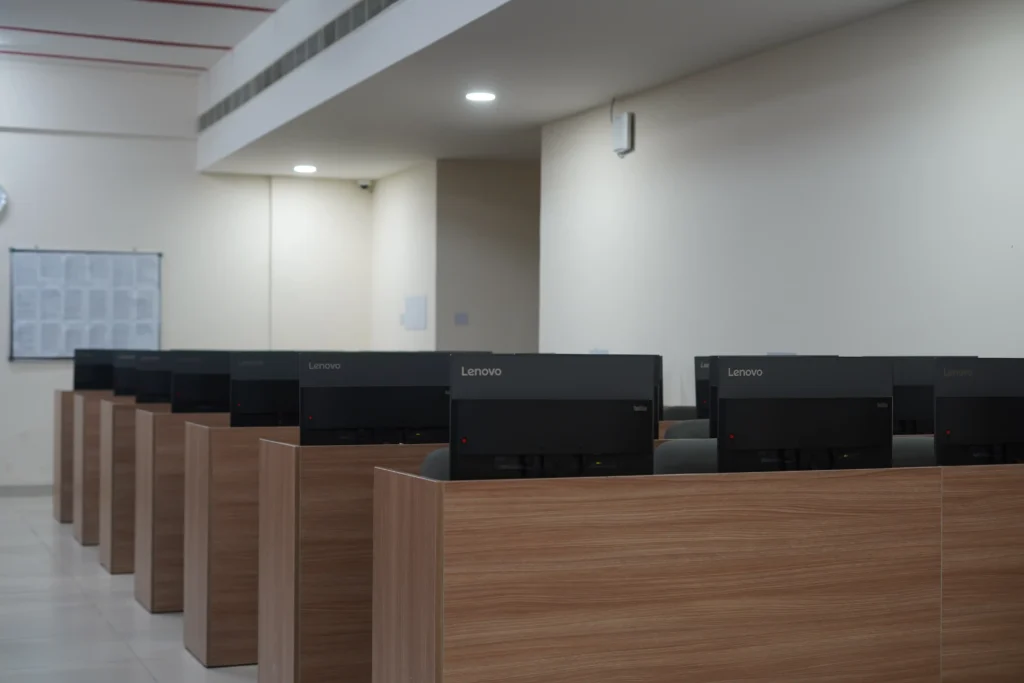
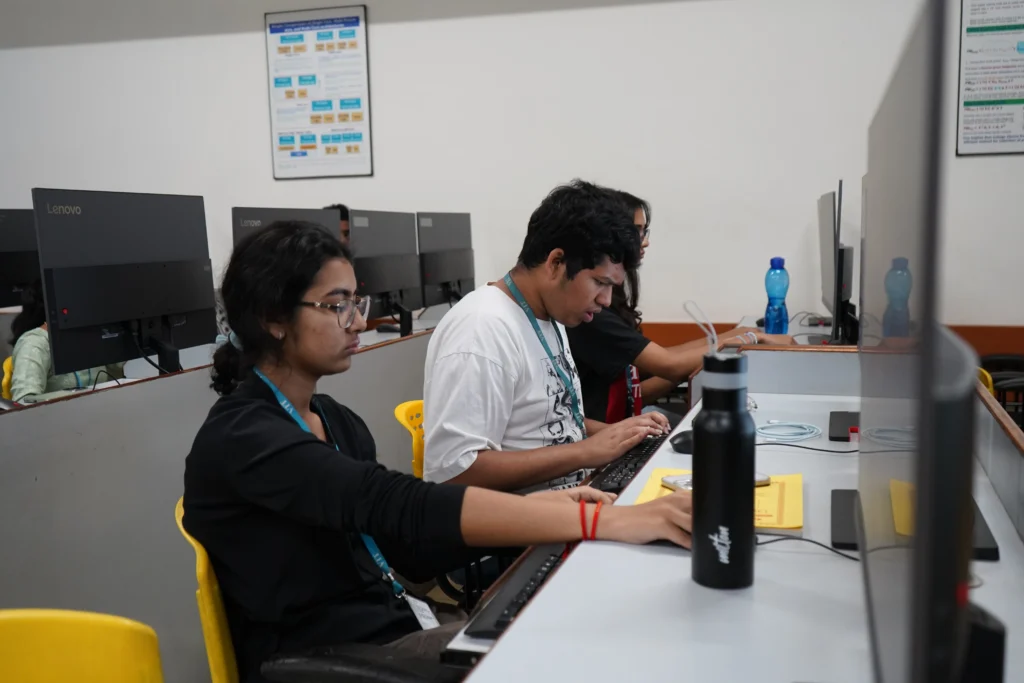
The Devops and Automation Laboratory is equipped with 66 HP SFF 280 systems to support a controlled, hands-on environment – physical or virtual, provides a controlled, high-performance environment designed to simulate real-world software delivery cycles by integrating development (Dev) and IT operations (Ops) through automated workflows. Its primary purpose is to provide a hands-on space for implementing Continuous Integration and Continuous Deployment (CI/CD) pipelines, which reduce manual intervention and accelerate the time-to-market for software products. The key components of the lab include Version Control, CI/CD Pipeline, Infrastructure as Code (IaC), and Monitoring and Observability.
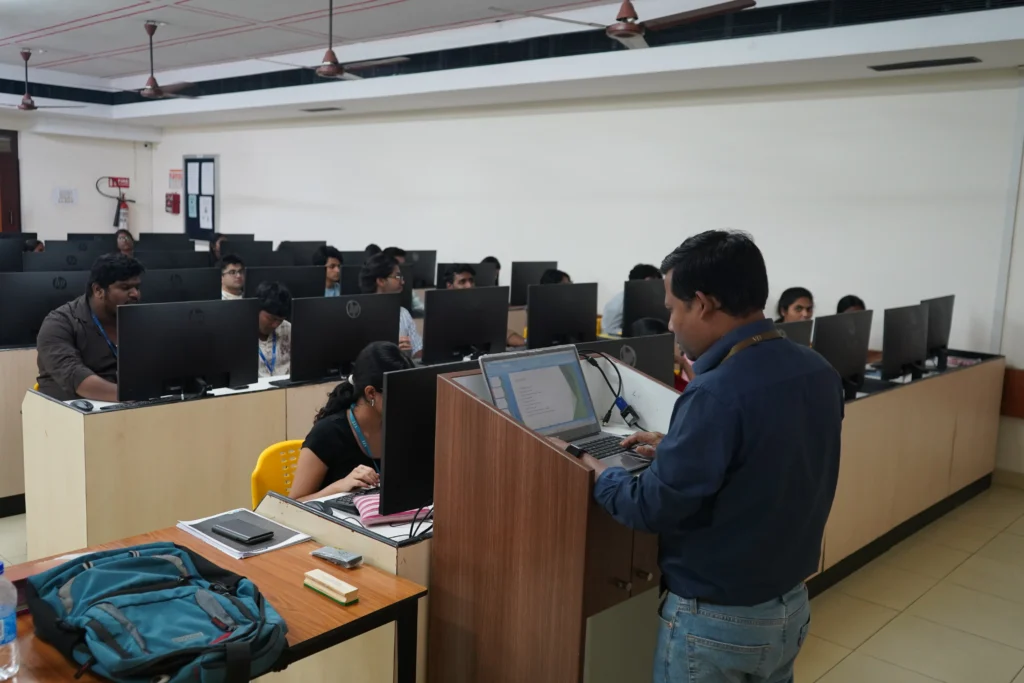
The core objective of such a lab is to replace manual, error-prone tasks with automated scripts and tools to accelerate the software development lifecycle (SDLC) while ensuring high reliability and security. Many labs are increasingly incorporating AI and Machine Learning to optimize testing and detect anomalies earlier in the cycle. Ultimately, a DevOps and automation lab serves as the “engine room” for digital transformation, allowing organizations to scale infrastructure efficiently while maintaining high software quality and security through integrated DecSecOps practices.
Objectives
The primary objective of the lab is to create a high-fidelity, sandbox environment where teams can safely engineer and refine the automated workflows essential for modern software delivery. The focus has shifted from simple tool integration toward building intelligent, self-healing systems.
- Establishment of CI/CD Pipelines: Automate the entire "build-test-deploy" cycle to ensure that code changes are continuously validated and ready for production with minimal manual intervention.
- Infrastructure as Code (IaC) Standardization: Provision and manage complex environments using version-controlled scripts (e.g., Terraform or Ansible), ensuring consistency across development, staging, and production.
- Shift-Left Security Integration (DevSecOps): Embed automated security scans, vulnerability detection, and compliance checks early in the development lifecycle to mitigate risks before they reach live environments.
- Accelerated Feedback Loops: Use automated testing and real-time monitoring (e.g., Prometheus or Grafana) to provide developers with immediate insights into code performance and system health.
- Cost and Resource Optimization: Implement "FinOps" strategies through automation to manage cloud spending, such as automatically scaling down idle resources or rightsizing instances to avoid waste.
- Implementation of AI-Driven Operations (AIOps): Increasingly aim to integrate AI Agents that can autonomously predict failures, summarize logs, and initiate self-healing protocols for system recovery.

Key Focus Areas
- Platform Engineering & Self-Service: A primary focus is shifting from ad-hoc pipelines to Internal Developer Platforms (IDPs). Labs provide standardized “paved roads” and self-service portals, reducing cognitive load on developers by automating environment setup and tool provisioning.
- AI-Native Operations (AIOps): Labs increasingly integrate agentic AI to automate the entire software development lifecycle (SDLC). Focus areas include predictive analytics for anomaly detection, AI-driven root cause analysis, and autonomous remediation to reduce downtime.
- Deep DevSecOps & Supply Chain Security: Security is no longer a separate gate but is embedded as “security as intelligence”. The scope includes automated Software Bill of Materials (SBOM) generation, cryptographic artifact signing, and policy-as-code to ensure continuous compliance.
- Infrastructure & Architecture as Code (IaC 2.0): Beyond basic templates, labs focus on Architecture-as-Code and control planes. This ensures infrastructure is not only automated but also versioned, testable, and continuously reconciled to prevent “environment drift”.
- Reliability Economics (SRE & FinOps): The scope includes managing cloud costs and sustainability as core engineering metrics. Labs use FinOps to automate resource rightsizing and SRE practices to align release velocity with defined error budgets.
- Observability 2.0: Moving beyond traditional monitoring, the focus is on high-fidelity visibility across distributed, cloud-native systems. This includes real-time analysis of metrics, logs, and traces to provide actionable insights directly within the delivery pipeline.
Research Publications
Cherian, Aaron Mano, D. Ajitha, Avanish Gouraha, and Dipanshu Mandal. “Optimizing Existing SHM Systems: Retasking as a Self-Healing Solution for Improved Fault Tolerance.” In 2025 International Conference on Emerging Smart Computing and Informatics (ESCI), pp. 1-6. IEEE, 2025.
Gupta, Arjun, Ashutosh Shivakumar Prabhudesai, Shaunak Sushant Nagvenkar, and Akila Victor. “Generative AI-Enhanced Data Marketplaces: Algorithms and Platforms for Secure Data Exchange.” In 2025 International Conference on Sensors and Related Networks (SENNET) Special Focus on Digital Healthcare (64220), pp. 1-7. IEEE, 2025.