


Machine Vision Lab
- Home
- Schools
- SCOPE
- Facilities
- Machine Vision Lab
Machine Vision Lab
Overview
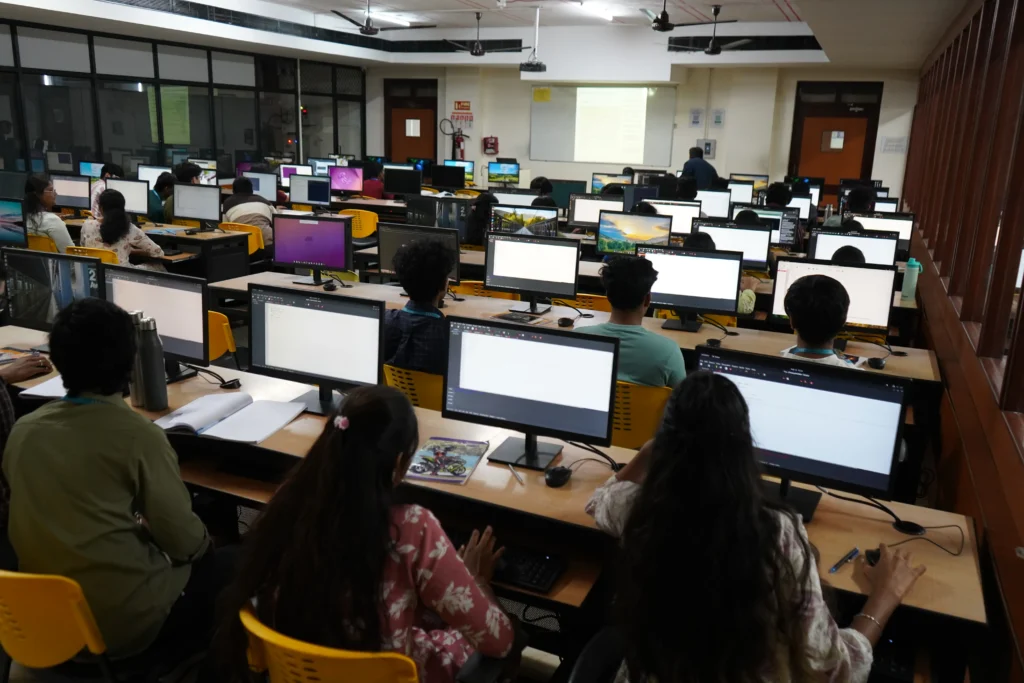
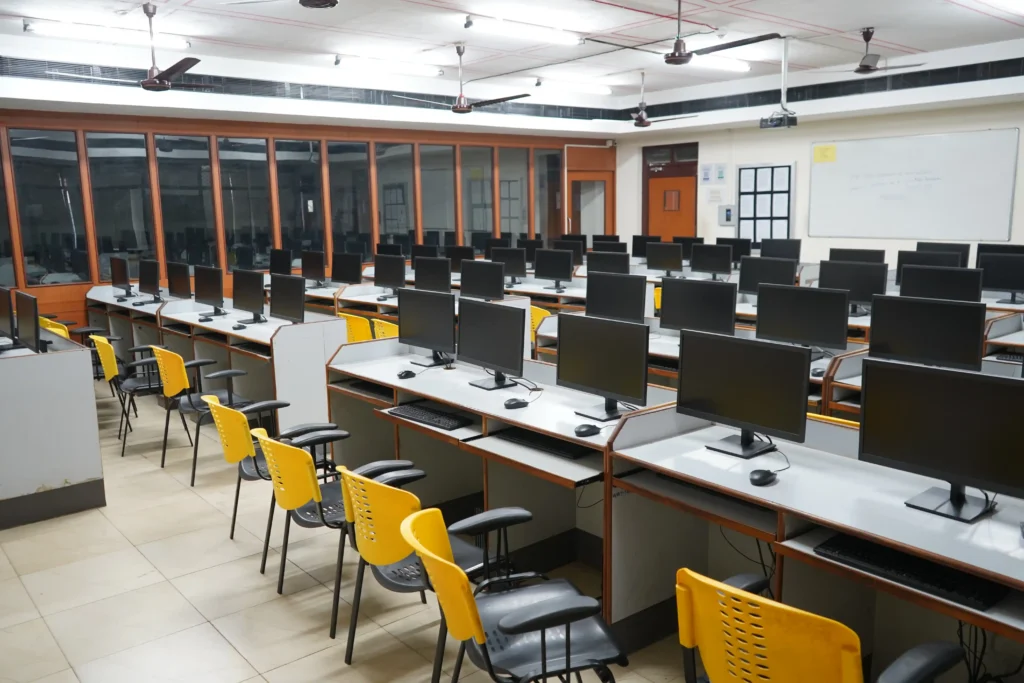
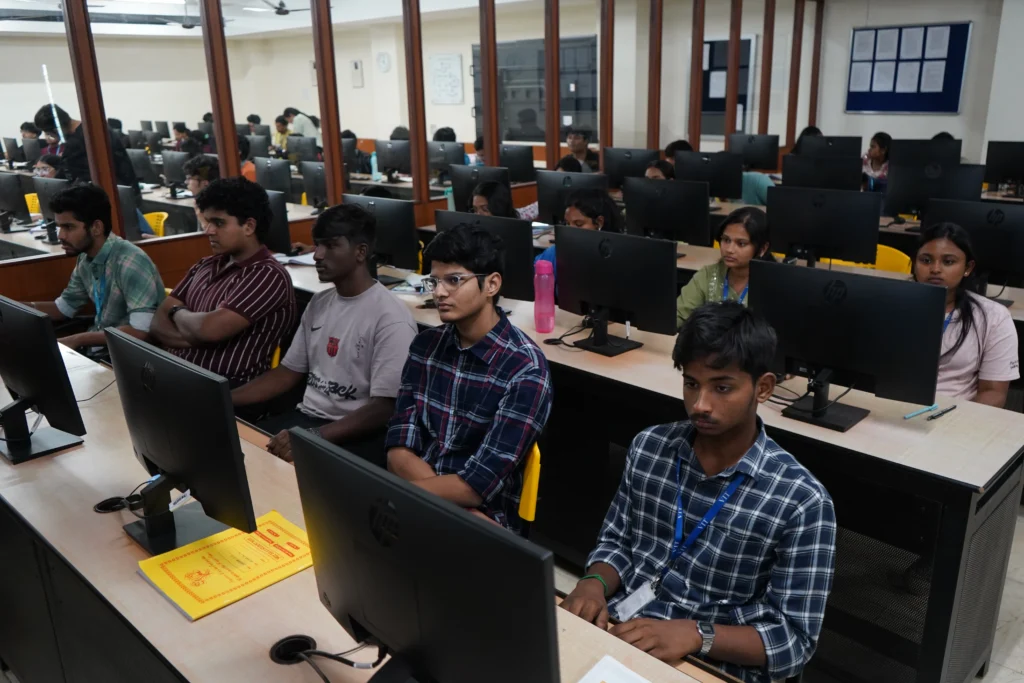
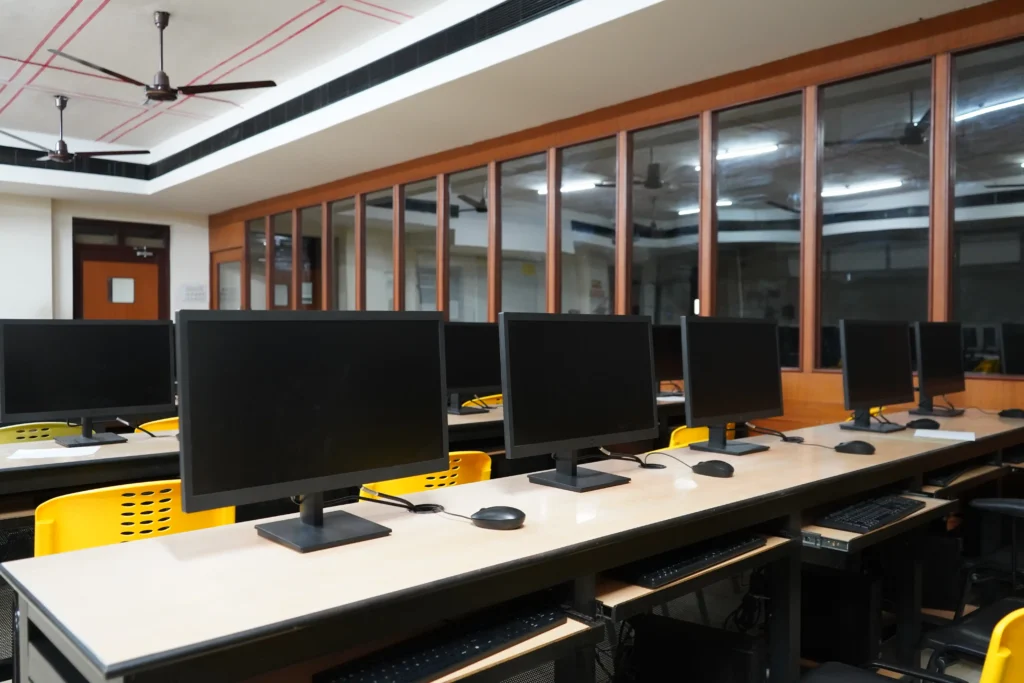
The SJT-419 Machine Vision Lab is designed to provide students with strong practical exposure to computer vision, image processing, and visual intelligence systems. The lab enables learners to bridge the gap between theory and real-world visual computing applications through hands-on experimentation using industry-standard tools and frameworks. This laboratory supports undergraduate programs by offering a structured environment for implementing image enhancement, feature extraction, object detection, recognition, and deep learning–based vision models. The lab is equipped with modern computing systems, high-resolution displays, and necessary software to support experimentation in classical and deep learning–based vision techniques.
Objectives
- To reinforce the theoretical foundations of machine vision through practical implementation
- To develop skills in image acquisition, preprocessing, and feature extraction
- To enable students to design and evaluate vision-based algorithms
- To gain exposure to deep learning models for visual recognition
- To enhance programming, debugging, and performance-analysis skills
Key Focus Areas
- Digital image representation and transformations
- Image enhancement and restoration techniques
- Feature detection and description.
- Object detection and recognition
- Motion analysis and video processing
- Deep learning for computer vision (CNN-based models)
- Practical applications in healthcare, surveillance, robotics, and automation
On-going Project Titles :
- Soil Analysis using ML Methods.
- Forecasting Marine wave patterns using Deep Learning Techniques with wave monitoring Data.
Research Publications
- Anguchamy, Kishore Kumar, and Venketesh Palanisamy. “Real-time object detection using improvised YOLOv4 and feature mapping technique for autonomous driving.” Expert systems with applications 280 (2025): 127452.
- Sreejam, M., and L. Agilandeeswari. “Deep multimodal unmixing of hyperspectral images using Convolutional Block Attention Module (CBAM) and LiDAR features.” The Egyptian Journal of Remote Sensing and Space Sciences 28, no. 4 (2025): 666-680.
- Vijayan, S., and Chiranji Lal Chowdhary. “Hybrid feature optimized CNN for rice crop disease prediction.” Scientific Reports 15, no. 1 (2025): 7904.