


Cloud Computing Lab
- Home
- Schools
- SCOPE
- Facilities
- Cloud Computing Lab
Cloud Computing Lab
Overview
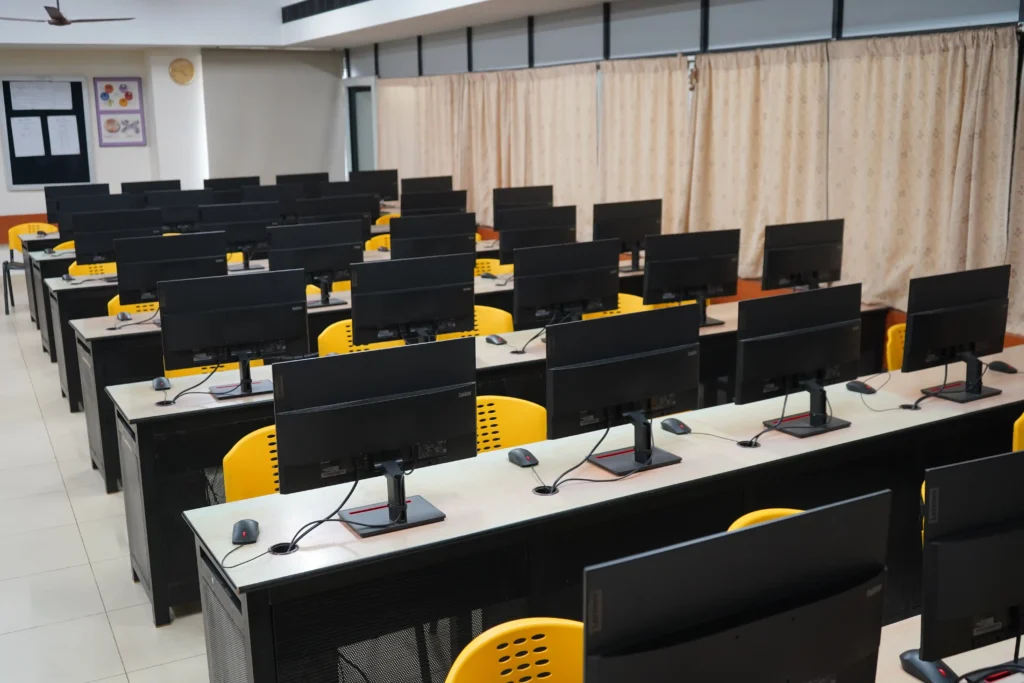
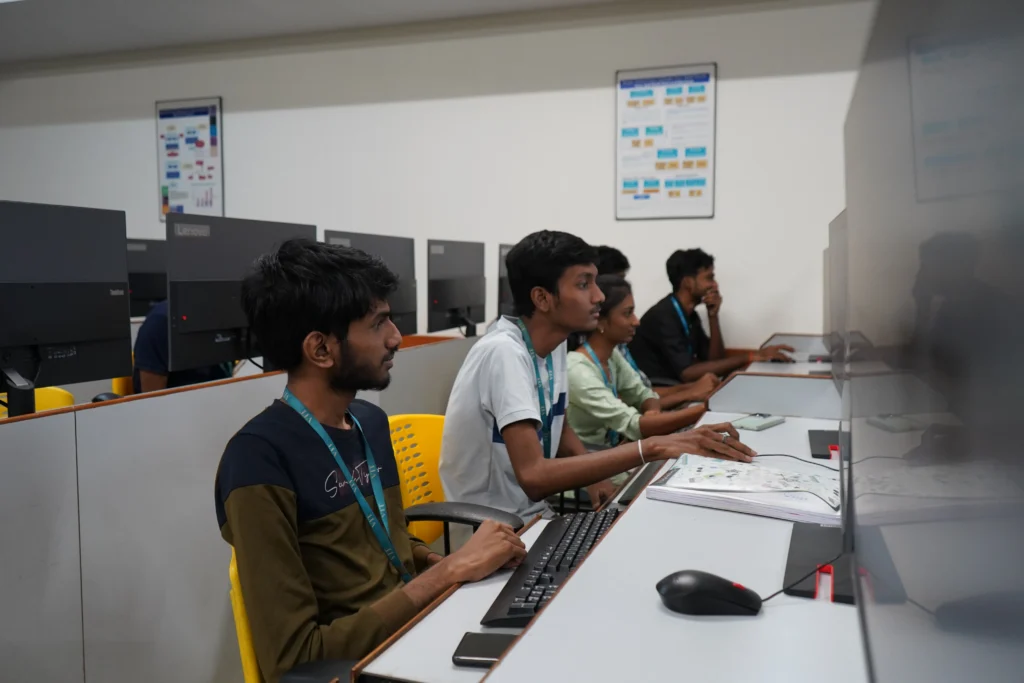
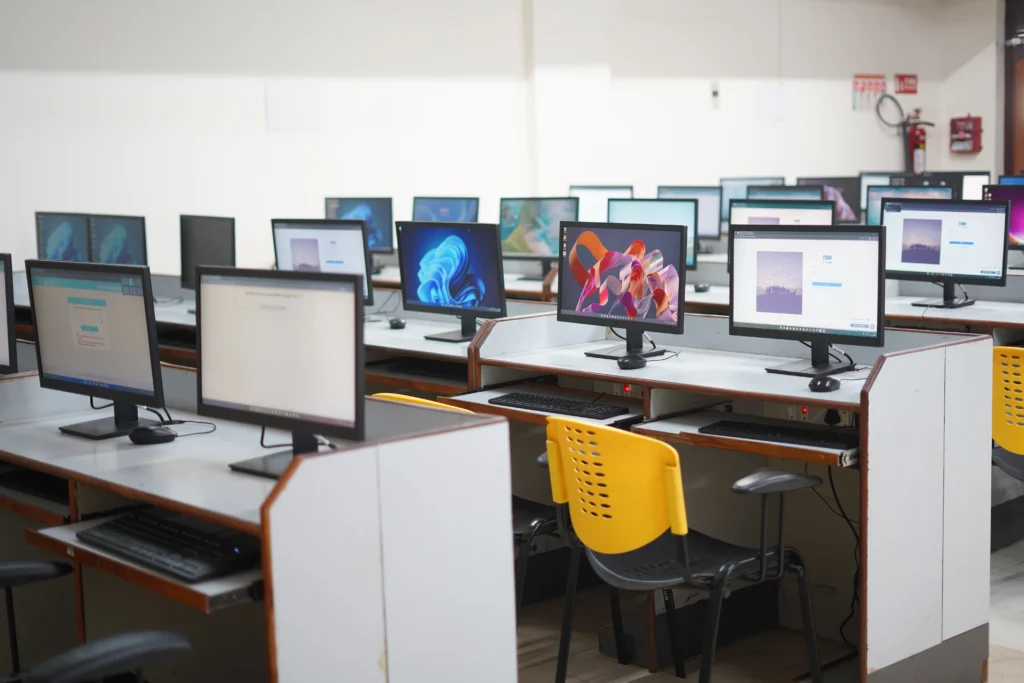
The Cloud Computing Laboratory, located at venue SJT 416, functions as a fundamental computing IX laboratory under the School of Computer Science and Engineering. The lab provides a strong practical foundation in cloud-based technologies and distributed computing environments. It supports hands-on learning for core courses such as Cloud Computing Methodologies, enabling students to understand cloud service models, virtualization, resource provisioning, and scalable application deployment. In addition, the laboratory facilitates practical sessions for the Cryptography and Network Security (CNS) Lab and the Software Engineering Lab, allowing students to implement networking concepts, security mechanisms, and software development life-cycle practices in a cloud-enabled setup.
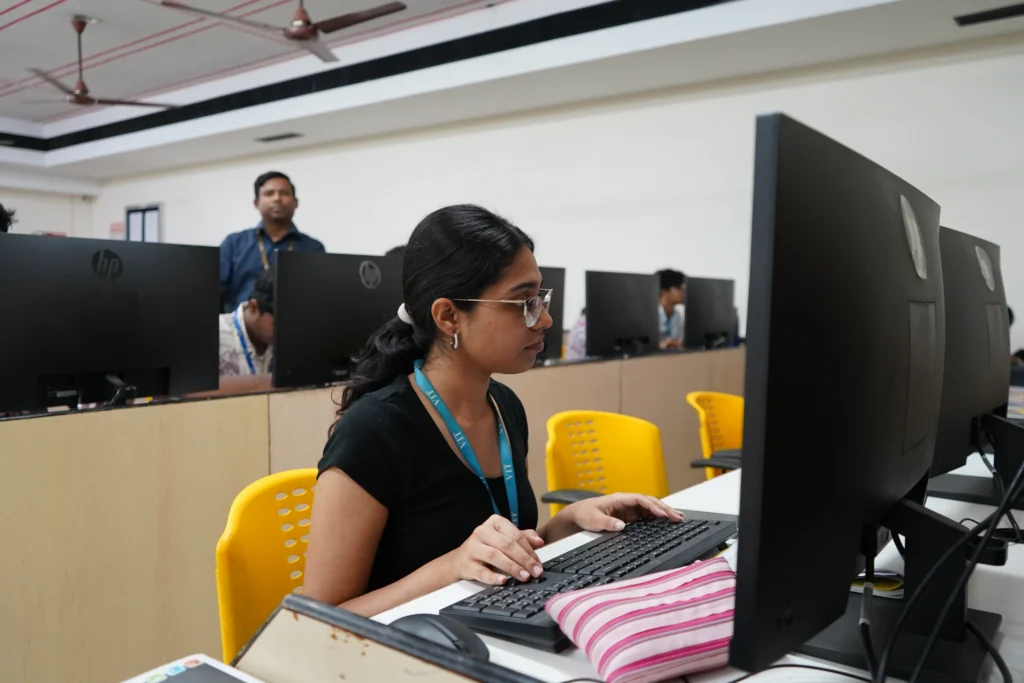
The lab emphasizes experiential learning by bridging theoretical concepts with real-world implementation, preparing students to design, deploy, and manage reliable and scalable computing solutions in modern cloud infrastructures.
Objectives
- To provide hands-on understanding of fundamental cloud computing concepts and architectures.
- To enable practical deployment and management of applications in cloud environments.
- To support implementation of networking and security concepts through CNS lab exercises.
- To apply software engineering principles using cloud-based development platforms.
- To develop industry-relevant skills for building scalable and reliable computing solutions.
Key Focus Areas
- Cloud Computing Fundamentals
Focuses on core concepts such as cloud architecture, deployment models (public, private, hybrid), and service models (IaaS, PaaS, SaaS), providing students with a strong conceptual and practical foundation. - Virtualization and Resource Management
Emphasizes virtual machines, containers, and hypervisors, along with efficient resource provisioning, scheduling, and load balancing in cloud environments. - Cloud-Based Application Development and Deployment
Enables hands-on experience in developing, deploying, and managing scalable applications using cloud platforms, microservices, and DevOps-oriented workflows. - Networking and Security in Cloud Environments (CNS)
Covers cloud networking concepts, secure communication protocols, identity and access management, data security, and basic threat mitigation techniques through practical exercises. - Software Engineering Practices on the Cloud
Integrates software engineering methodologies such as requirements analysis, system design, version control, testing, and continuous integration using cloud-based tools and environments.
Research Publications
Karthikeyan, P., and K. Brindha. “Smart data flow: a trust-driven hybrid fragmentation framework for optimizing data transmission in IoT-enabled edge-fog-cloud systems: P. Karthikeyan, K. Brindha.” Computing 107, no. 6 (2025): 140.
Jain, Pankaj, Richa Jain, and Bhawana Tyagi. “RLSK_US: An Improved Dynamic Virtual Machine Consolidation Model to Optimize Energy and SLA Violations in Cloud Datacenter.” Journal of Network and Systems Management 33, no. 3 (2025): 70.
Devipriya, A., N. Manikandan, A. Sivaranjani, M. Anand, and T. Ragupathi. “The Convergence of Cloud Computing and IoT in Healthcare: A Paradigm Shift Towards Patient-Centric Innovation.” In Advancements in Cloud-Based Intelligent Informative Engineering, pp. 229-256. IGI Global Scientific Publishing, 2025.
Ranjith, R., and A. Chandrasekar. “Optimizing Multi-Cloud Data Access: A Fuzzy-Logic-Based Approach to Adaptive Routing and Load Balancing.” Cybernetics and Systems (2025): 1-36.
Sumathi, M., S. P. Raja, A. Jense, Arul Princy S. Nelsting, and V. Swetha. “Optimal load balancing in cloud computing using hybrid meta-heuristic algorithms.” Journal of High Speed Networks (2024): 09266801251396617.