


Cognitive Computing Lab
- Home
- Schools
- SCOPE
- Facilities
- Cognitive Computing Lab
Cognitive Computing Lab
Overview
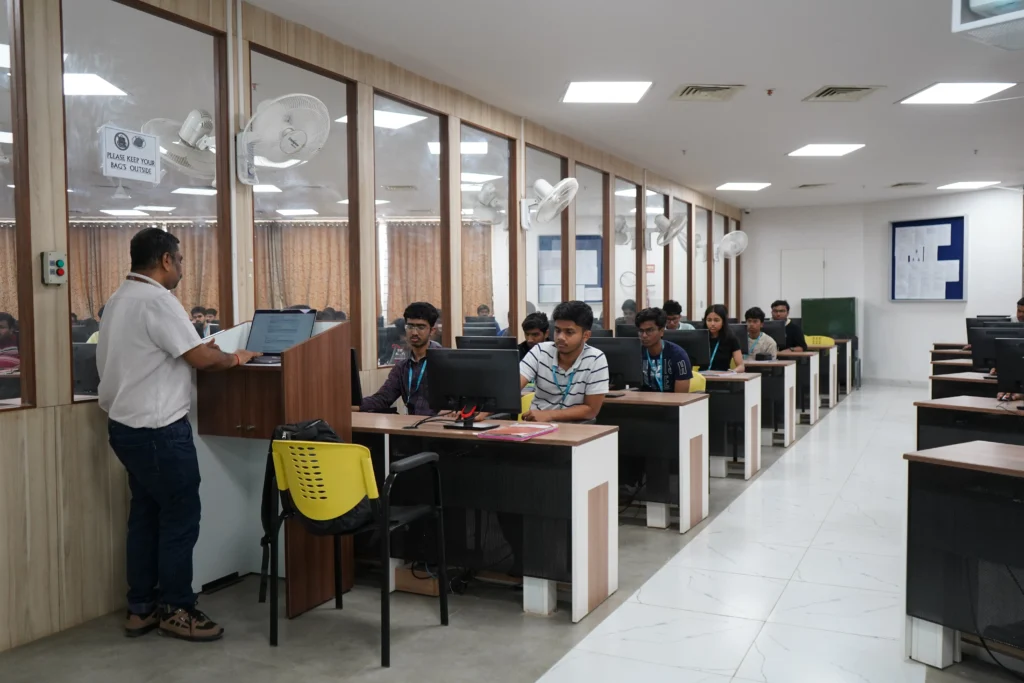
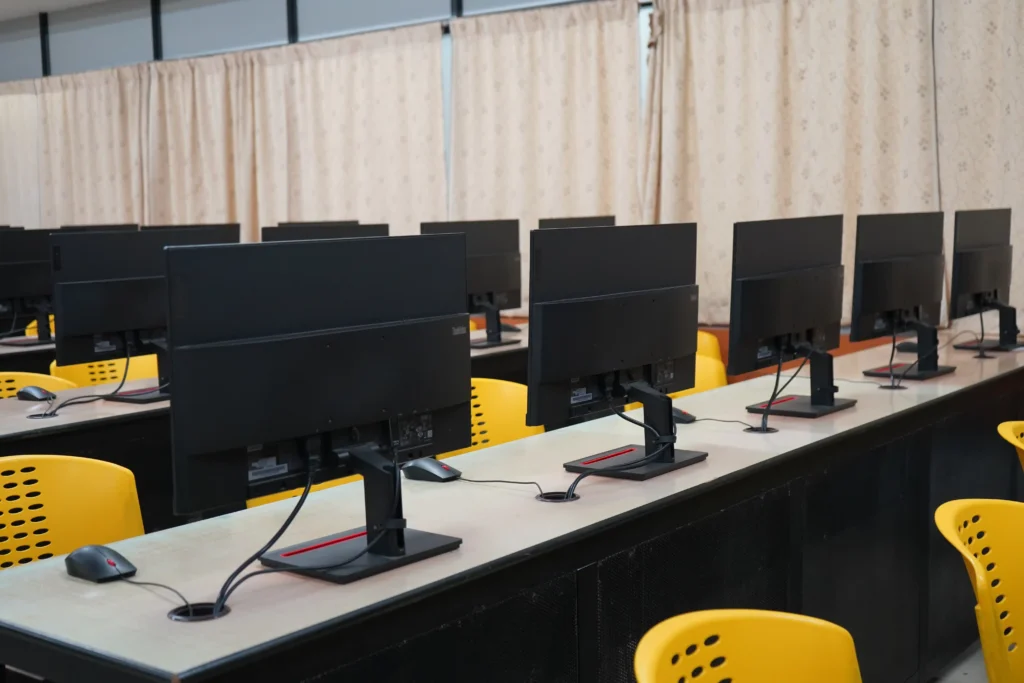
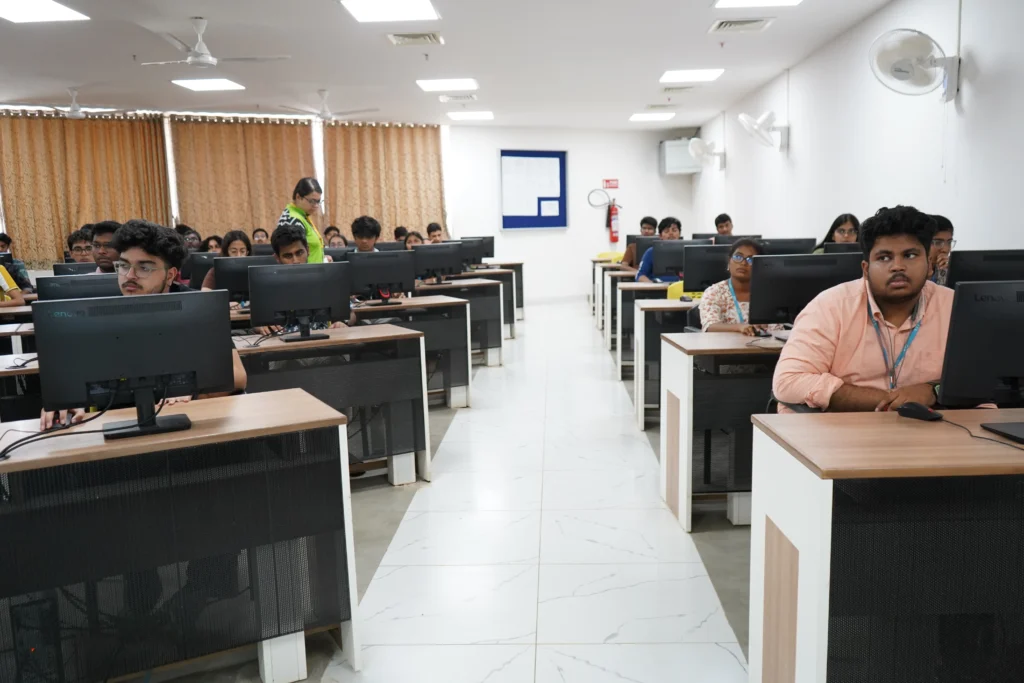
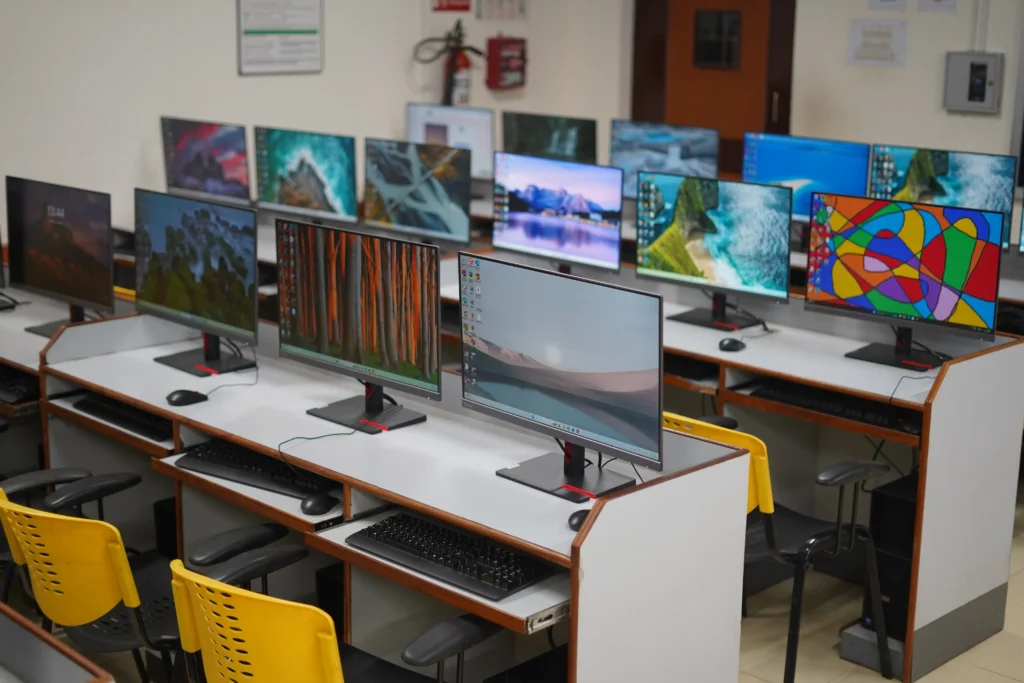
The Cognitive Computing Lab equips students with cutting-edge tools for programming, data analytics, and network simulations, fostering practical skills essential for modern computing careers. Its vision focuses on bridging theoretical computer science with hands-on innovation, while the mission delivers accessible, high-performance computing resources to nurture problem-solvers. This lab stands out for its 72-station capacity and comprehensive freeware ecosystem tailored to diverse academic needs.
The Cognitive Computing Lab bridges computer science, neuroscience, and social sciences to engineer systems that emulate human cognition—perception, reasoning, and adaptive learning. Housed within SCOPE, VIT, our team of researchers, PhD students, and collaborators drives breakthroughs in AI for real-world challenges like healthcare diagnostics and sustainable agriculture. With state-of-the-art GPU clusters and interdisciplinary partnerships, we transform theoretical models into deployable technologies.
The Cognitive Computing Lab bridges computer science, neuroscience, and social sciences to engineer systems that emulate human cognition—perception, reasoning, and adaptive learning. Housed within SCOPE, VIT, our team of researchers, PhD students, and collaborators drives breakthroughs in AI for real-world challenges like healthcare diagnostics and sustainable agriculture. With state-of-the-art GPU clusters and interdisciplinary partnerships, we transform theoretical models into deployable technologies.
Objectives
- Developing scalable models for multimodal data processing, drawing from psychology and linguistics for natural language understanding.
- Advancing hybrid quantum-classical systems for complex decision-making in agriculture and health, optimizing federated learning for privacy-preserving AI.
- Fostering interdisciplinary applications, such as neuroinformatics tools for disease prediction and social behavior modeling via reinforcement learning and related applications to be facilitated.
Key Focus Areas
- Designing intuitive interfaces and adaptive educational tools informed by psychological models.
- Developing systems for content understanding, generation, and multimodal data handling.
- Brain-inspired algorithms like deep learning, optimization, and neural networks for perception, decision-making, and big data analytics.
- Projects in bioinformatics, mental health diagnostics, ethical AI, and social policy analysis, often using techniques like Bayesian inference and reinforcement learning.
Research Publications
- KB, Indra Devi, and Durai Raj Vincent PM. “The emergence of artificial intelligence in autism spectrum disorder research: A review of neuro imaging and behavioral applications.” Computer Science Review 56 (2025): 100718.
- Shekatkar, Atharva Rajesh, Aditya Deodeshmukh, and Ilanthenral Kandasamy. “Refined Neutrosophic Cognitive Maps: A Novel Framework for Modeling Indeterminate Causal Relationships.” International Journal of Fuzzy Systems (2025): 1-24.
- Tulaskar, Dhiraj P., Battina Sindhu, Nitin Chakole, Rina Parteki, A. Anny Leema, P. Balakrishnan, Ankita Avthanka, Rangnath Girhe, Madhusudan B. Kulkarni, and Manish Bhaiyya. “AI and ML Empowering 5G and Shaping the 6G Future: Models, Metrics, Architectures, and Applications.” ICT Express (2025).
- Nancharaiah, B., Lakshmi Sevukamoorthy, Bhavya G, TM Sathish Kumar, TR Vijaya Lakshmi, and Swapna Siddamsetti. “A Smart Intelligent Internet of Things Framework for Predicting Mental Health.” Advanced Theory and Simulations 8, no. 12 (2025): e00048.
- Mishra, Pratham, Senthil Kumar Narayanasamy, and Kathiravan Srinivasan. “Context-Aware Embedded Language Transformers for Evaluating Climate Change based Sustainable Development Goals.” IEEE Access (2025).