


Database Systems Lab
- Home
- Schools
- SCOPE
- Facilities
- Database Systems Lab
Database Systems Lab
Overview
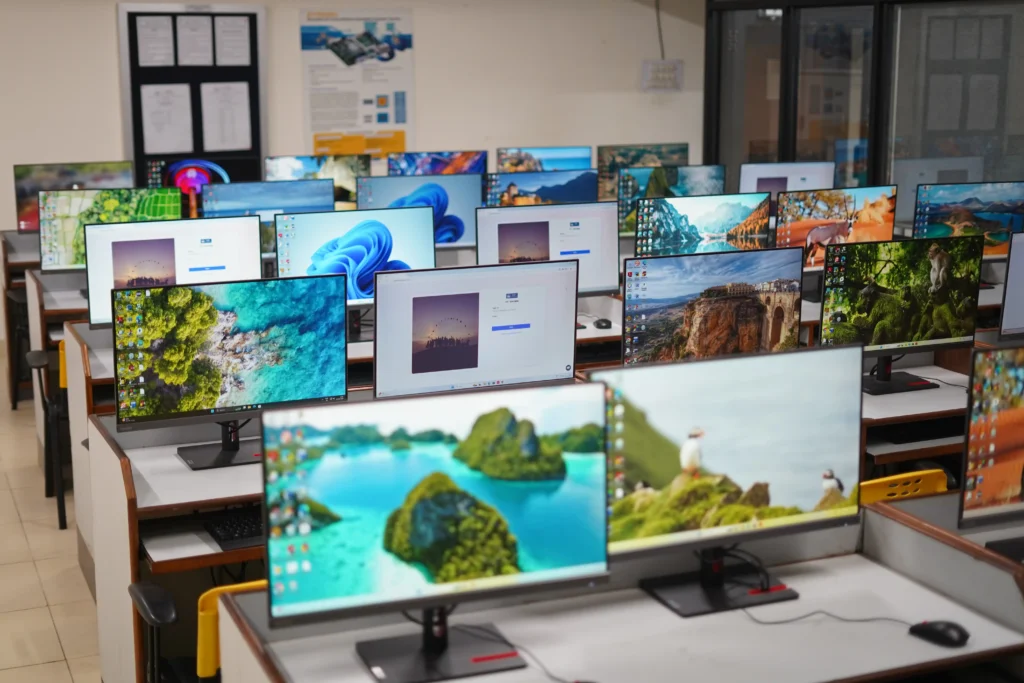
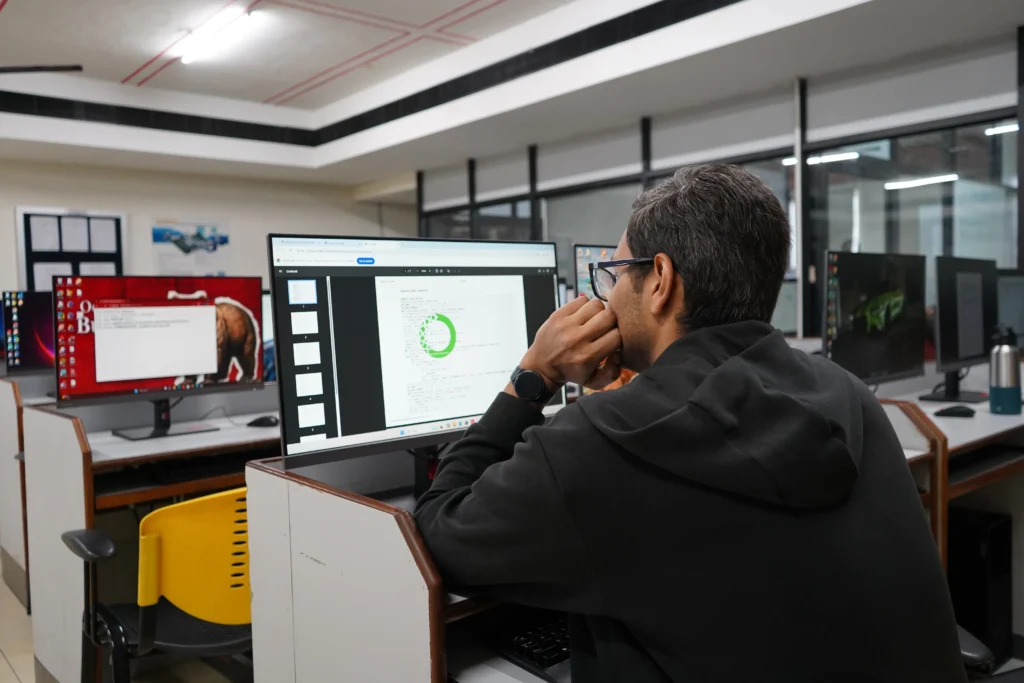
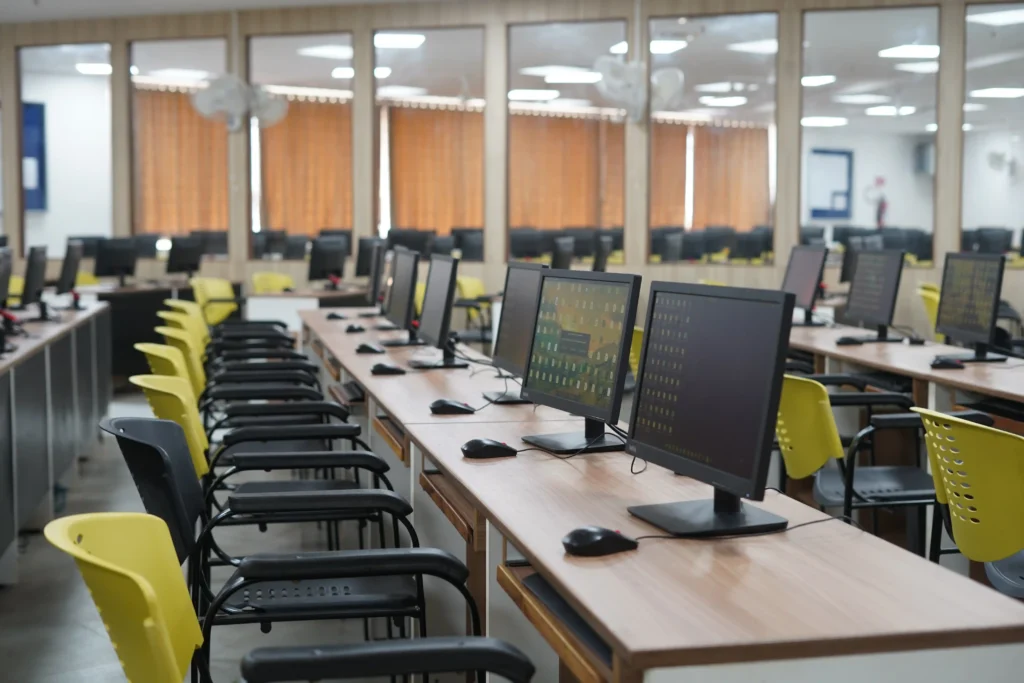
The Database Systems Laboratory, located at SJT 319, is a dedicated academic and research facility within the School of Computer Science and Engineering. It provides a practical environment for hands-on learning and experimentation in courses such as Database Systems, Principles of Database Systems, and Computer Programming with Java. The laboratory focuses on the design, implementation, and management of databases, enabling students to develop skills in data modeling, query processing, and application development for real-world information systems.
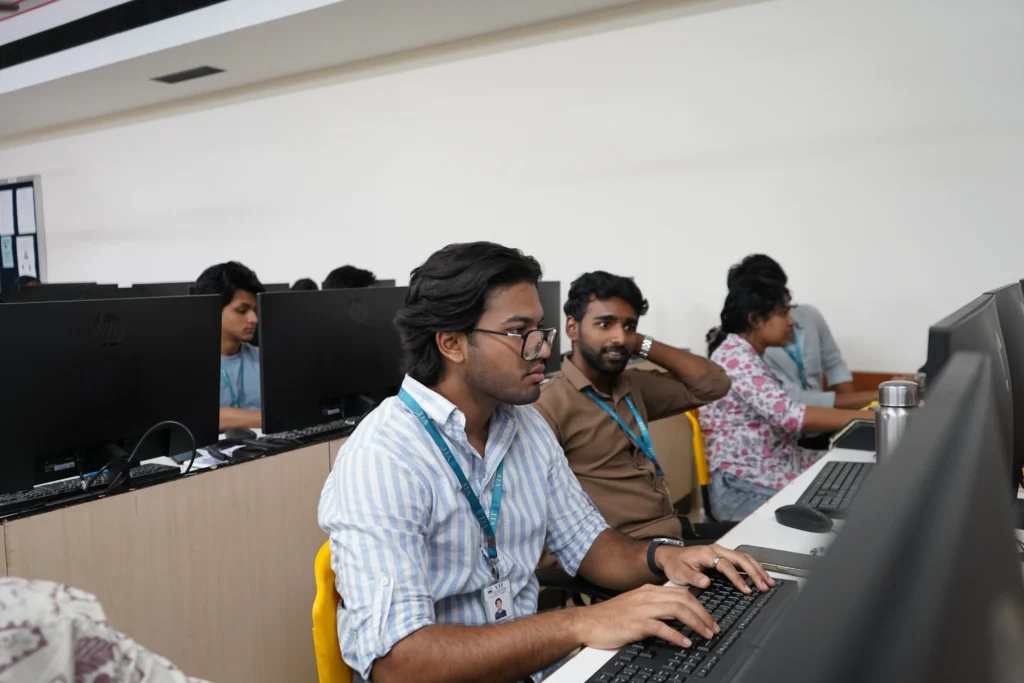
Objectives
- To provide structured hands-on exposure to database design, SQL programming, and application development through well-defined laboratory experiments.
- To strengthen students’ understanding of data modeling, normalization, transaction management, and query optimization techniques.
- To support course-integrated projects, mini-projects, and capstone work in database systems and related programming applications.
- To enable research-oriented learning by encouraging experimentation with relational, NoSQL, and distributed database systems.
- To promote the effective use of industry-standard database management systems, tools, and frameworks for building scalable, efficient, and reliable data-driven applications.
- To foster interdisciplinary applications of database technologies across domains such as software development, enterprise systems, data analytics, and intelligent services.
Key Focus Areas
- Database Design and Modeling: Entity-Relationship modeling, normalization, schema design, and relational database architecture.
- SQL and Query Optimization: Writing efficient SQL queries, joins, subqueries, indexing, and query performance tuning.
- Transaction Management and Concurrency Control: Ensuring data consistency, ACID properties, and handling concurrent database access.
- Database Programming: Stored procedures, triggers, functions, and integrating databases with application programming (e.g., Java).
- Advanced Database Systems: NoSQL databases, distributed databases, and big data storage solutions.
- Data Management and Analytics: Data extraction, transformation, loading (ETL), and managing structured and semi-structured data.
- Research and Innovation: Benchmarking database performance, prototyping applications, and exploring new database technologies and tools.