


Intelligent Systems Lab
- Home
- Schools
- SCOPE
- Facilities
- Intelligent Systems Lab
Intelligent Systems Lab
Overview
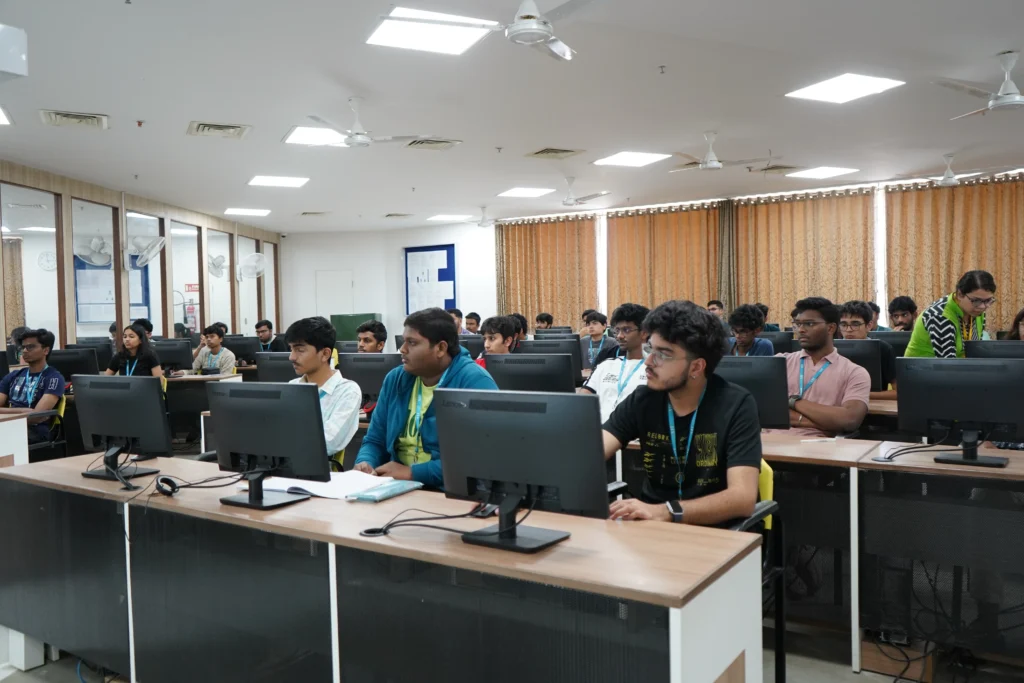
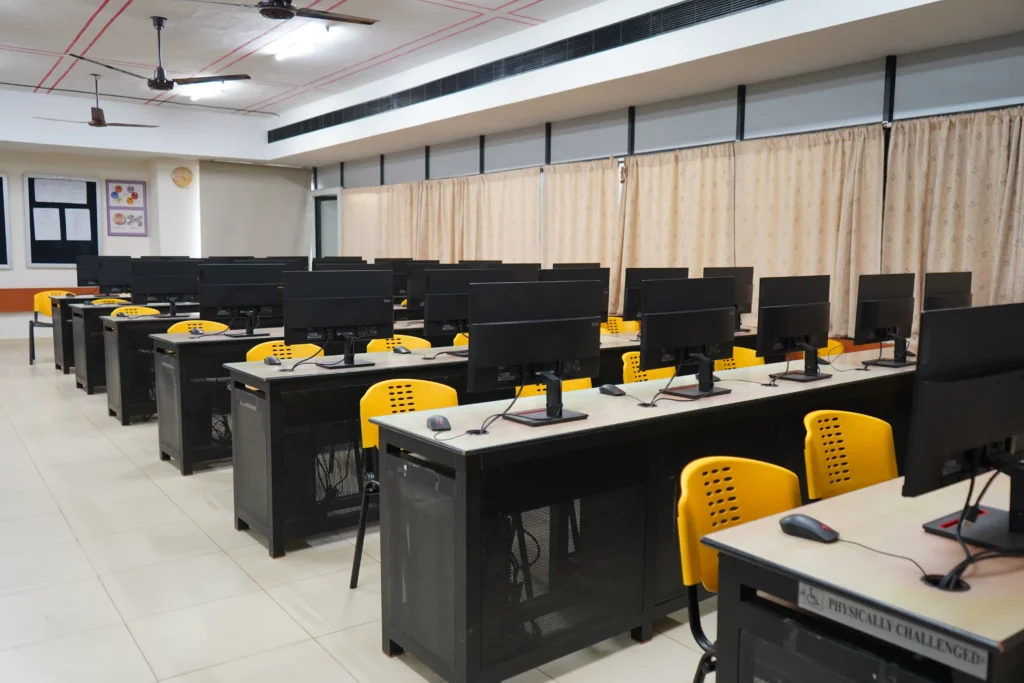
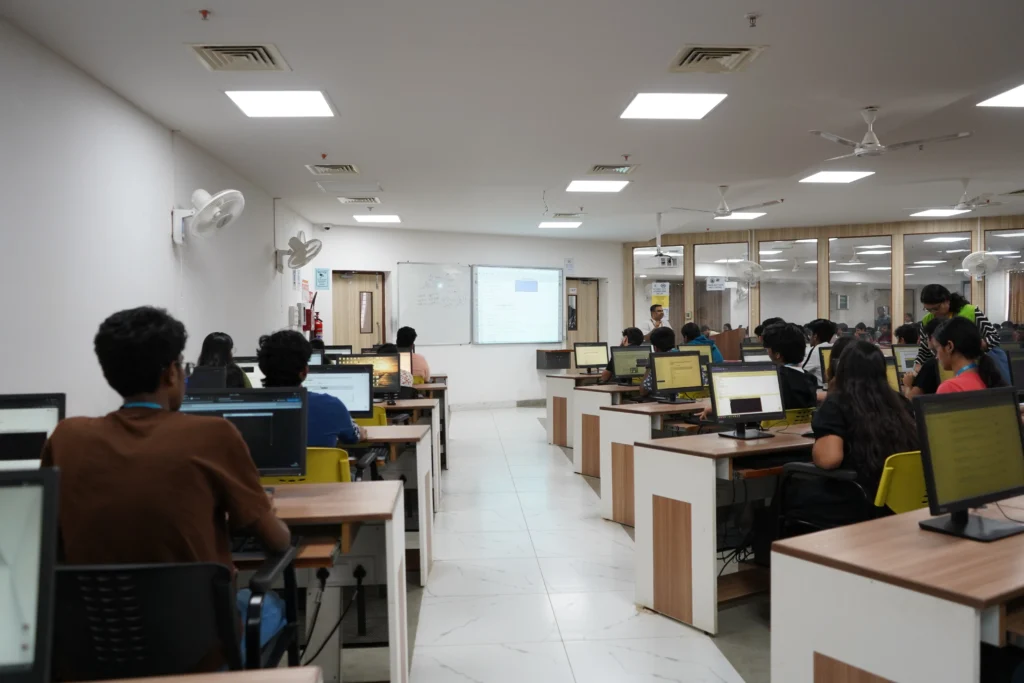
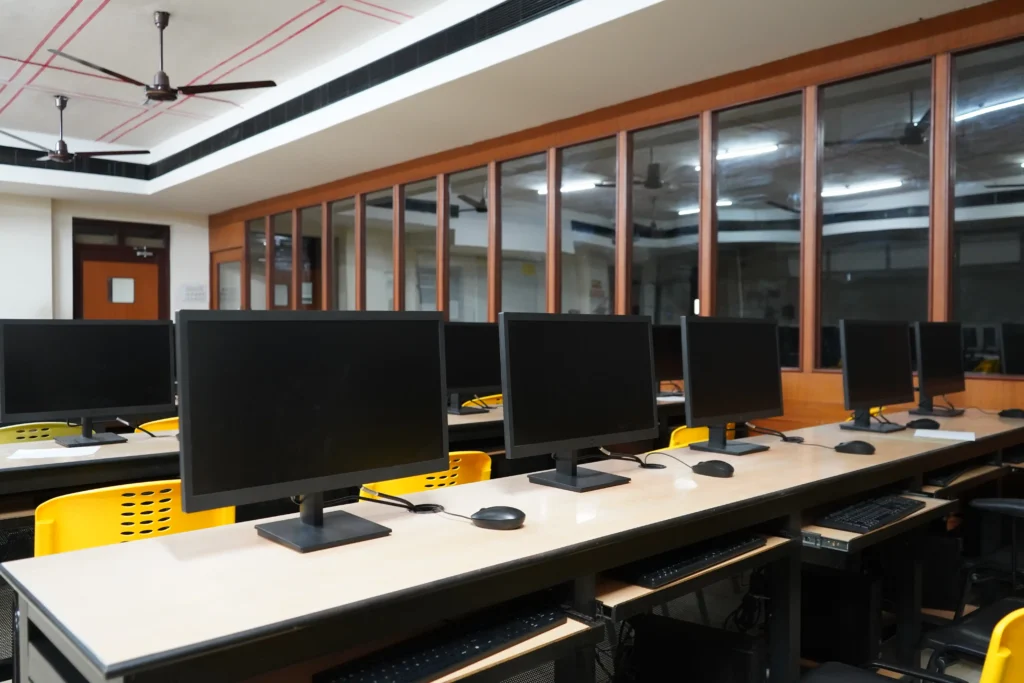
Intelligent Systems Lab located in first floor of PRP D wing aims to provide technical facilities for Artificial intelligence courses in the School of Computer science and Engineering. This lab aims to conduct experiments to build intelligent systems, train models using large datasets, and develop real-world applications like chatbots, recommendation systems, autonomous systems, and healthcare or finance solutions. This lab greatly supports innovation, collaboration, and hands-on learning for students, researchers, and professionals. Apart from this lab also provides a supporting hand for Web programming
Objectives
- To understand and implement core AI algorithms such as search, optimization, and learning techniques using principles from Design and Analysis of Algorithms.
- To design intelligent solutions by applying algorithmic paradigms such as greedy methods, divide-and-conquer, dynamic programming, and heuristic-based search.
- To develop AI-driven web applications by integrating intelligent models with web technologies (HTML, CSS, JavaScript, backend frameworks).
- To implement intelligent decision-making systems that interact with users through web interfaces.
- To evaluate AI systems using performance metrics and algorithmic benchmarking techniques.
Key Focus Areas
- Algorithmic Foundations of Intelligent Systems: search, optimization, and heuristic algorithms with emphasis on design strategies and complexity analysis.
- Machine Learning and Intelligent Models: Develop, train, and evaluate learning algorithms with attention to performance and scalability.
- AI-Enabled Web Application Development:Integrate intelligent algorithms and models into web-based applications using client-server architecture and APIs.
- Performance Analysis and Optimization: Analyze, benchmark, and optimize AI algorithms and web-based intelligent systems for efficiency and real-world deployment.
Research Publications:
- Mishra, Madhusmita, and D. P. Acharjya. “A review on swarm optimization, hybridization and extent of applications.” International Journal of Data Science and Analytics (2025): 1-26.
- Rahman, Afroze, Anindita Kundu, and Sumanta Banerjee. “IQ-RRT*: a path planning algorithm based on informed-RRT* and quick-RRT.” International Journal of Computational Science and Engineering 28, no. 3 (2025): 303-313.
- Khekare, Ganesh, Gyana Ranjana Panigrahi, Vipin Singh, Goutam Majumder, and Nilesh Shelke. “Adaptive Ensemble Learning for Real Time Sign Language Recognition.” In 2025 International Conference on Networks & Advances in Computational Technologies (NetACT), pp. 1-6. IEEE, 2025.
- Balakrishnan, P., A. Anny Leema, N. Jothiaruna, Purshottam J. Assudani, K. Sankar, Madhusudan B. Kulkarni, and Manish Bhaiyya. “Artificial intelligence for food safety: From predictive models to real-world safeguards.” Trends in Food Science & Technology 163 (2025): 105153