


Advanced Microcontroller and RTOS Lab
- Home
- Schools
- SENSE
- Facilities
- Advanced Microcontroller and RTOS Lab
Advanced Microcontroller and RTOS Lab
Overview
The Advanced Microcontroller and RTOS lab courses focus on designing smart and efficient embedded systems that can perform tasks in real time. It covers advanced features of microcontrollers such as timers, interrupts, ADC, PWM, and communication protocols like UART, SPI, and I2C, and implementing in hardware 8051, ARM, FPGA boards like Nexus4, ZYBO 7000, PYNQ Z2, EDGE FPGA boards, and Jetson Nano board. Also, it has an RTOS (Real-Time Operating System) course, which helps run multiple tasks at the same time and ensures important tasks are completed within a fixed time. In addition, students learn about task management, scheduling, and communication between tasks using tools like semaphores and queues. Overall, it helps in understanding how real-time systems are built and used in applications like robotics, automation, automotive systems, and IoT.
This lab is utilized for B.Tech and M.Tech student’s regular Lab & Projects works.
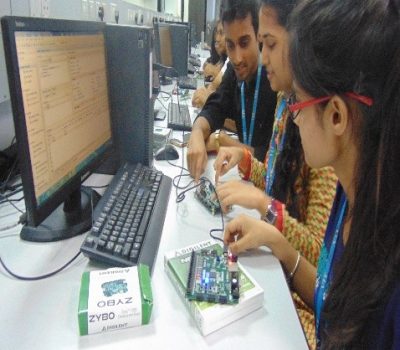
Objectives
- Provide practical knowledge of modern Microcontroller Systems
- Help students design and implement Embedded Applications
- Understand advanced microcontroller Architectures and their programming
- Interface with peripherals like:
- Sensors
- Communication modules
- Display units
- Introduce RTOS (Real-Time Operating System) concepts:
- Multitasking
- Task scheduling
- Inter-task communication
- Synchronization using semaphores and mutexes
- Learn debugging, system performance analysis, optimize resource usage and power consumption
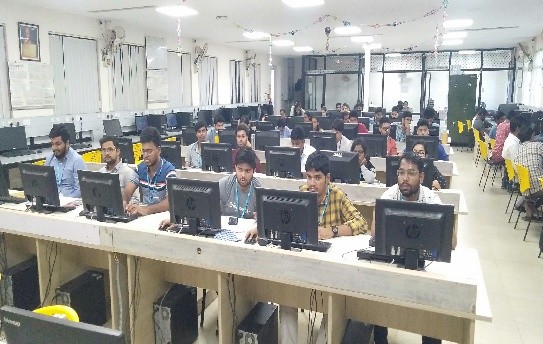
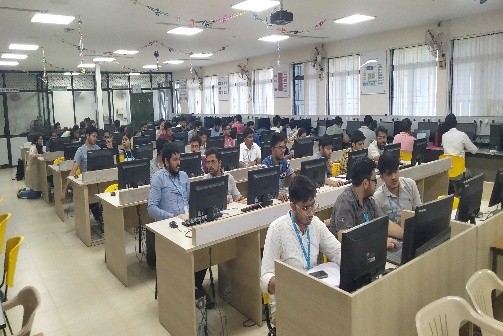
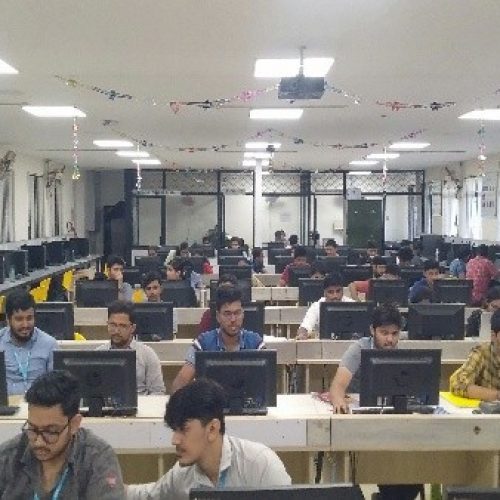
Key Focus Areas
- Advanced microcontroller features (timers, interrupts, ADC, PWM)
- Interfacing with sensors and display devices
- Communication protocols (UART, SPI, I2C)
- Embedded C programming
- RTOS basics and multitasking
- Task creation and management and scheduling methods
- Inter-task communication (semaphores, mutexes, queues)
- Real-time system design, debugging and performance improvement
- Efficient memory and power usage
- Development of real-time applications (robotics, IoT, automation).