

FIST Lab - MEMS and Chemical Sensors Lab
- Home
- Schools
- SENSE
- Facilities
- FIST Lab - MEMS and Chemical Sensors Lab
FIST Lab - MEMS and Chemical Sensors Lab
Overview
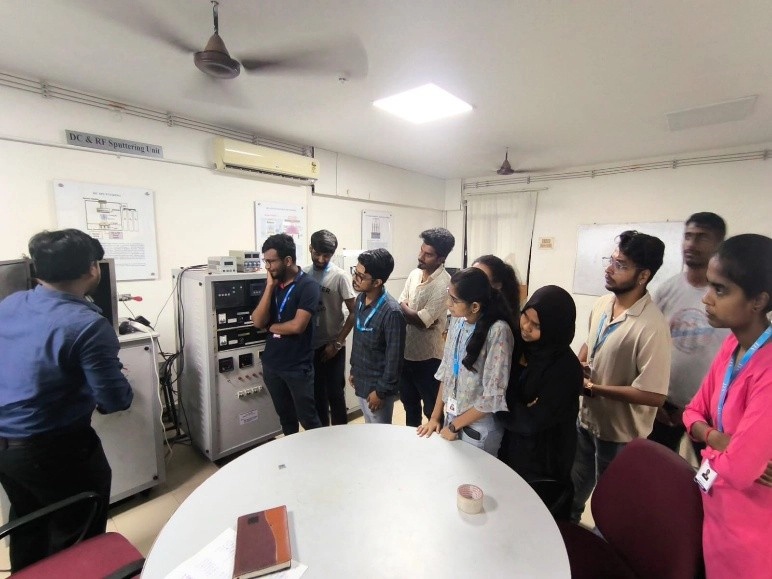
The MEMS and Chemical Sensors Lab, established under the FIST initiative in the School of Electronics Engineering (SENSE), is a state-of-the-art facility dedicated to advanced research and hands-on training in microelectromechanical systems (MEMS) and chemical sensing technologies. The lab is designed to provide strong interdisciplinary foundations by integrating principles of electronics, materials science, and sensor engineering. The facility supports the development and characterization of miniaturized sensors, including fiber optic sensors, thin film-based devices, and nanomaterial-enabled sensing platforms for chemical and biological detection. Key research areas include gas sensing, biosensing, and environmental monitoring using advanced materials such as metal oxides, graphene-based structures, and hybrid nanocomposites. The lab emphasizes practical learning through sensor fabrication, micro/nano material synthesis, and real-time characterization techniques. Students and researchers gain expertise in instrumentation, data acquisition, and analysis, enabling them to bridge the gap between theoretical concepts and real-world applications. The facility plays a vital role in fostering innovation and supporting cutting-edge research in healthcare, environmental safety, and smart sensing technologies.
Objectives
- To provide hands-on training in MEMS design, fabrication, and characterization techniques.
- To develop strong fundamentals in chemical and biosensing technologies using advanced materials.
- To enable research in gas sensing, environmental monitoring, and healthcare diagnostics.
- To enhance skills in thin film deposition, nanomaterial synthesis, and surface functionalization.
- To train students in the use of modern instrumentation for sensor development and real-time analysis.
- To promote interdisciplinary research combining electronics, materials science, and sensor engineering.
- To support innovation in miniaturized, high-performance, and cost-effective sensing devices.
- To encourage project-based learning, research publications, and technology development.
Key Focus Areas
- MEMS & Sensor Design: Microfabrication and development of miniaturized sensing devices.
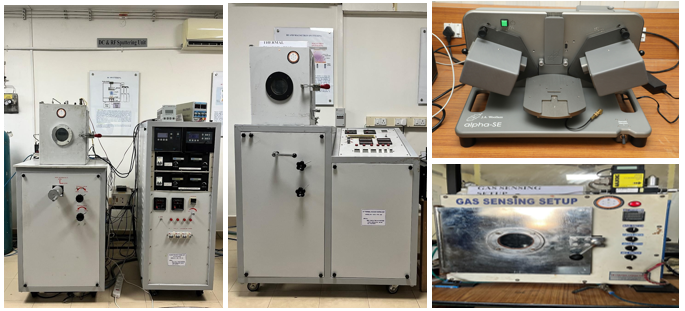
- Thin Films & Nanomaterials: Deposition and synthesis of advanced materials for sensing applications.
- Optical & Chemical Sensing: Fiber optic sensors and detection of gases, VOCs, and chemicals.
- Biosensing Applications: Development of sensors for glucose and biomarker detection.
- Characterization & Data Analysis: Sensor testing, performance evaluation, and signal processing.