


FPGA Laboratory
- Home
- Schools
- SENSE
- Facilities
- FPGA Laboratory
FPGA Laboratory (TT 237)
Overview
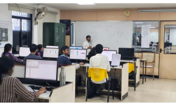
The TT 237 FPGA Laboratory is designed to provide students and researchers with hands-on experience in FPGA prototyping, digital system design, and embedded computing. Some of its software is funded by the C2S programme. The laboratory is equipped with 35 computer systems for design and simulation activities
Industry-standard Electronic Design Automation (EDA) tools, including Cadence, Synopsys, Quartus Prime, and Xilinx Vivado, support work from RTL coding and simulation through synthesis, verification, and hardware implementation.
The laboratory houses 60 Altera FPGA boards and 20 PYNQ Z2 SoC boards for Python-based FPGA programming and rapid prototyping. It also provides Zynq UltraScale+ MPSoC, Zed SoC, and Kria SoC boards to support research and experiments in heterogeneous computing, AI acceleration, and real-time system design.
Objectives
- Provide hands-on experience in FPGA prototyping, digital system design, and embedded computing.
- Enable complete design flows using industry-standard EDA tools such as Cadence, Synopsys, Quartus Prime, and Xilinx Vivado.
- Facilitate academic projects and advanced research using diverse FPGA and SoC hardware resources.
- Promote innovation in heterogeneous computing, AI acceleration, and real-time system design.
FPGA laboratory session
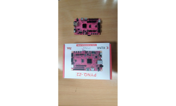
PYNQ-Z2 FPGA development board
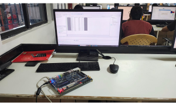
FPGA prototyping workstation
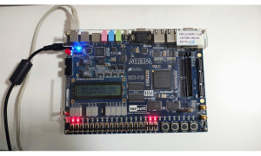
Altera FPGA development board
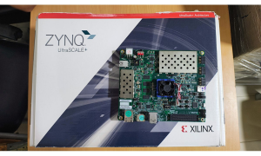
Zynq UltraScale+ development board

Key Focus Areas
- FPGA prototyping – hands-on design and rapid hardware implementation.
- EDA tools training – workflows with Cadence, Synopsys, Quartus Prime, and Xilinx Vivado.
- Embedded computing – Python-based FPGA programming with PYNQ Z2 boards.
- Advanced hardware exploration – Zynq UltraScale+, Zed, and Kria SoC boards.
- Innovation in AI and real-time systems – heterogeneous computing and AI acceleration research.