


Algorithms and Complexity Lab
Algorithms and Complexity Lab
Overview
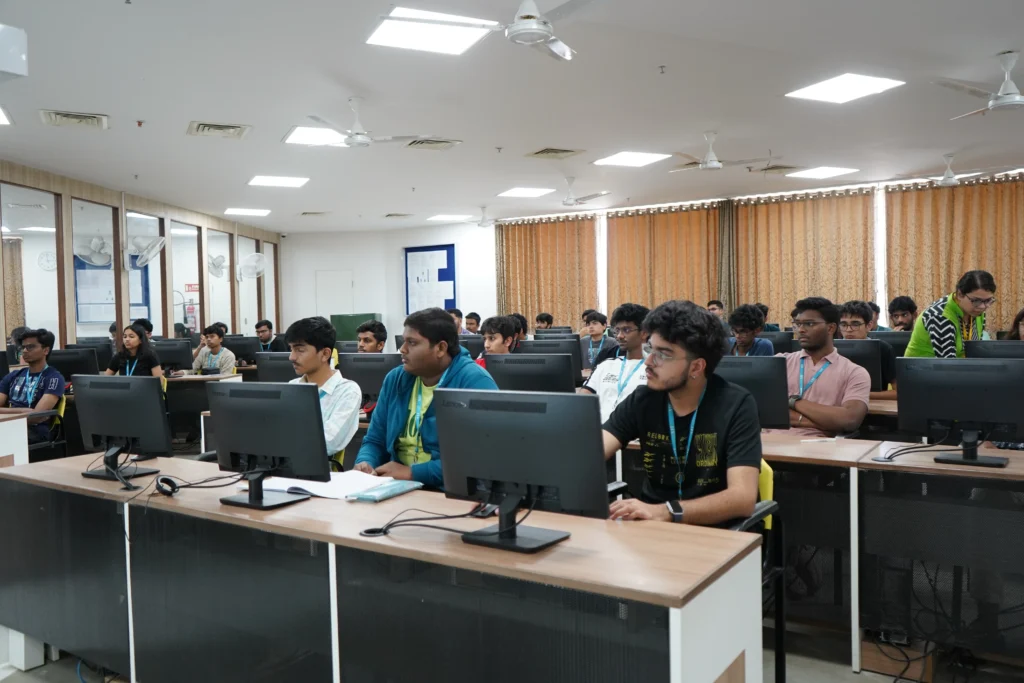
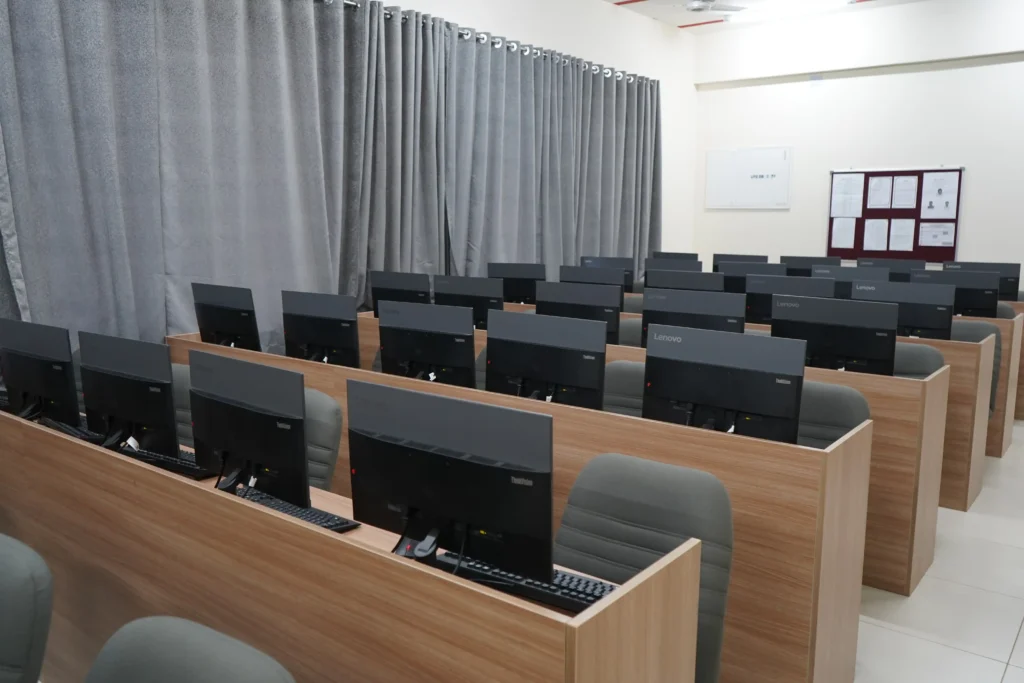
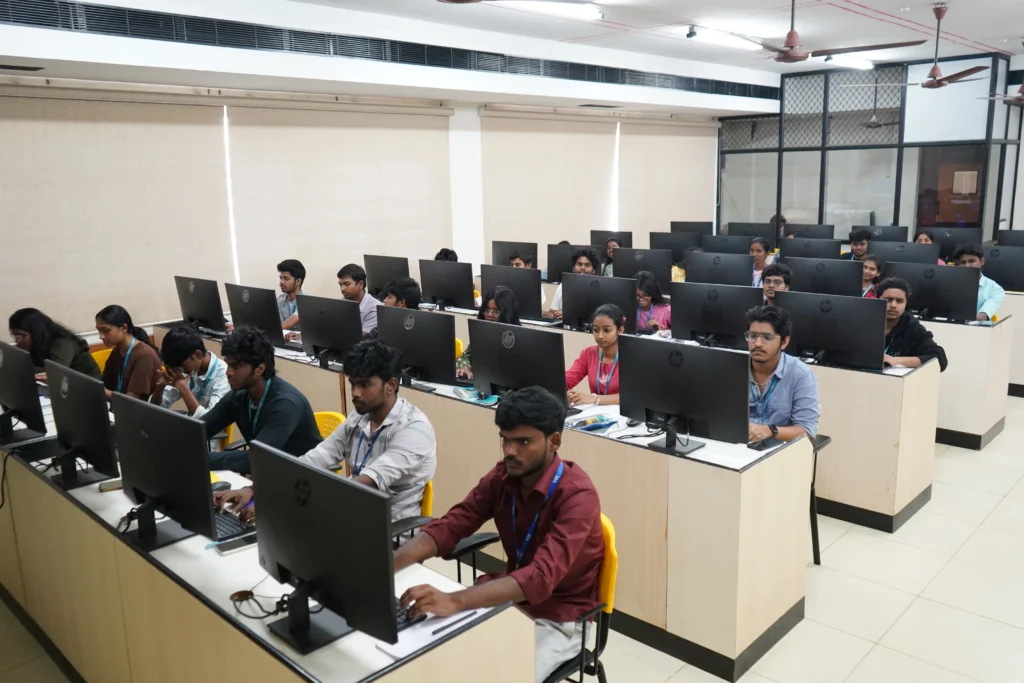
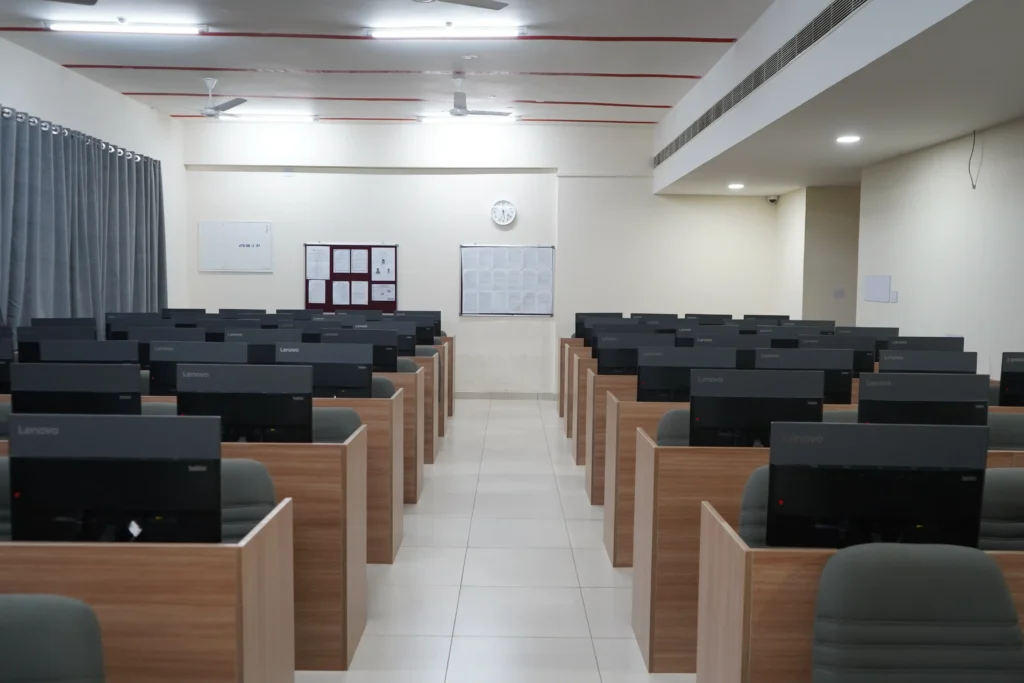
The Algorithm and Complexity Lab is a specialized computing laboratory designed to support undergraduate courses related to Algorithm Design, Analysis, and Computational Complexity. The lab provides students with hands-on exposure to implementing, analyzing, and optimizing algorithms using appropriate data structures and programming techniques. It enables practical understanding of algorithmic efficiency, time and space complexity, and problem-solving strategies essential for computer science and engineering disciplines. The laboratory is equipped with modern computing systems, enabling students to simulate, test, and evaluate algorithms under various constraints, thereby strengthening the connection between theoretical concepts and real-world applications.
Objectives
- To provide strong hands-on learning by enabling students to implement, analyze, and optimize classical and advanced algorithms using appropriate data structures and programming practices, thereby reinforcing theoretical concepts through practical experimentation.
- To promote experimental evaluation, benchmarking, and comparative analysis of algorithms under varying input conditions, encouraging exploration of computational complexity, scalability, and performance limitations through mini-projects and research-oriented activities.
- To develop industry-relevant problem-solving, optimization, and coding skills by simulating real-world computational problems, preparing students for technical interviews, competitive coding, and professional roles in software engineering and advanced computing.
Key Focus Areas
- Algorithm design and implementation using techniques such as divide-and-conquer, greedy methods, and dynamic programming with appropriate data structures
- Time and space complexity analysis through both asymptotic notations and empirical performance evaluation.
- Algorithm optimization, benchmarking, and comparative performance analysis to study efficiency and scalability.
- Experimental research on computational performance, complexity limits, and efficient problem-solving strategies.
- Use of industry-standard programming environments (C, C++, Python), operating systems, and profiling/benchmarking tools for algorithm analysis.
- Research Areas : Algebra and Computation, Computational Geometry, Distributed Algorithms, Graph Algorithms, Parameterized Algorithms, Circuit Complexity Theory, Algebraic Complexity Theory, Structural Complexity Theory, Communication Complexity, Pseudorandomness, Boolean Function Analysis
Research Publications
- Rajasekar, V.R. Analysing the Energy and Power Consumption Impact of Selective Forwarding Attacks on 6LoWPANs: A Detailed Evaluation of MRHOF and OF0 Objective Functions. J Electron Test (2025). https://doi.org/10.1007/s10836-025-06206-1
- Kavitha, K.C., Jagatheswari, S., Dhivviyanandam, I. et al. Topological Properties and Computation of Neural Networks Using Cover Pebbling Number Technique with an Algorithmic Approach. Circuits Syst Signal Process 44, 8069–8090 (2025). https://doi.org/10.1007/s00034-025-03201-x
- Bhaskaran, P., Prasanna, S. Quantum bee-inspired algorithm using quantum circuit and gradient descent optimizer on product recommendation. Evol. Intel. 18, 48 (2025). https://doi.org/10.1007/s12065-025-01031-z
- G. Lakshminarayana, D. Rene Dev, K. Vijetha, Neha Verma Gour, R. Mageswaran, S. Sree Dharinya, “Hybrid Optimization of Unified Power Quality Conditioner Placement for Enhanced Grid Performance,” SSRG International Journal of Electrical and Electronics Engineering, vol. 12, no. 3, pp. 74-83, 2025. Crossref, https://doi.org/10.14445/23488379/IJEEE-V12I3P108
- Mian, Tauheed & Tripathi, Achint & Kundu, Pradeep. (2025). Application of a Lightweight Transformer in Computationally Efficient Diagnosis of Rotating Machine Faults. Proceedings of the International Conference on Condition Monitoring and Asset Management. 2025. 1-10. 10.1784/cm2025.1f5.
- Palanisamy, S., Karunanithi, S., Periyasamy, B., Samidurai, S. and Salau, A. (2025), Hybrid CNN-GNN Framework for Enhanced Optimization and Performance Analysis of Frequency-Selective Surface Antennas. Int J Commun Syst, 38: e6105. https://doi.org/10.1002/dac.6105
- Vinoth John Prakash S, Karunanithi K, Dhal PK, Rajakumar P, Amosedinakaran S, Raja SP. Sustainable microgrid system for Easter Island with the least cost and GHG emission-free approach. Environ Prog Sustainable Energy. 2025; 44(4):e14623. doi:10.1002/ep.14623