


Bioinformatics Lab
Bioinformatics Lab
Overview
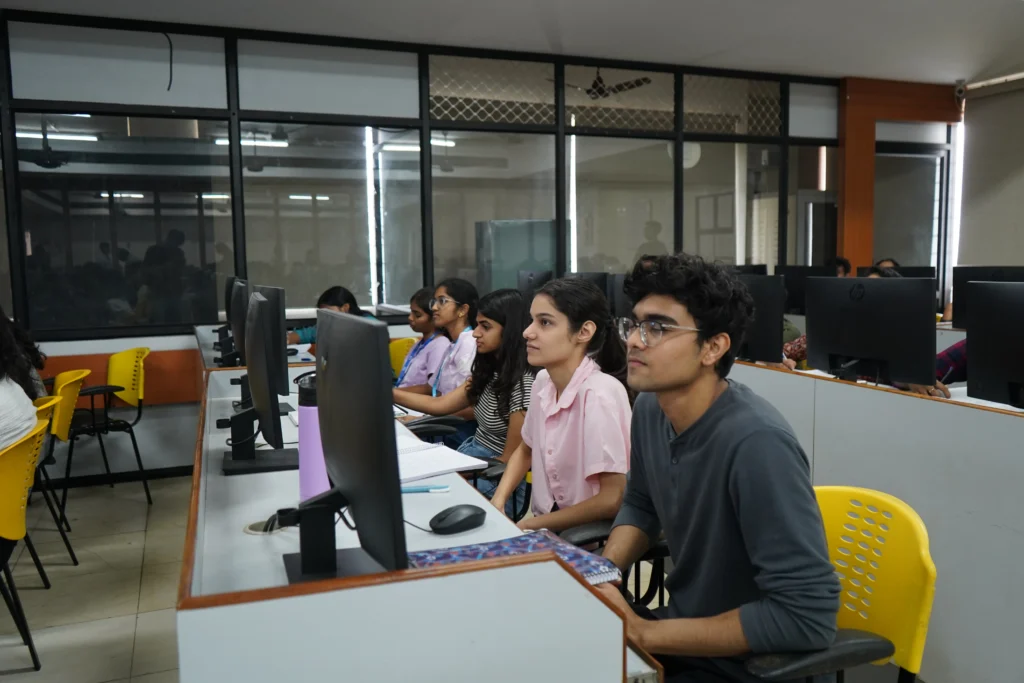
The bioinformatics lab focuses on the computational analysis of biological data using software tools and databases. In this lab, students and researchers retrieve and analyze DNA, RNA, and protein sequences, perform sequence alignment and phylogenetic analysis, predict gene and protein functions, and study protein structures and interactions. The lab also supports genomic and transcriptomic analyses, including gene expression and variant studies. Programming and statistical methods are often used to process large datasets, visualize results, and develop new analytical tools. Overall, a bioinformatics lab provides hands-on experience in applying computational techniques to solve biological and biomedical problems.
Objectives
- Introduction to the fundamentals: To introduce students to the fundamental concepts of bioinformatics and computational biology.
- Practical experience: To provide hands-on experience with biological databases and bioinformatics tools for sequence analysis.
- Data analysis: To familiarize students with data analysis, visualization, and interpretation of biological datasets.
- Statistical approach: To introduce basic programming and statistical approaches used in biological data analysis.
- Introduction to advanced topics: To enable students to analyze DNA, RNA, protein sequences, drug discovery, Genomics using alignment and similarity search techniques.
- Development of Analytical thinking: To encourage problem-solving and analytical thinking through practical exercises and mini-projects.


Key Focus Areas
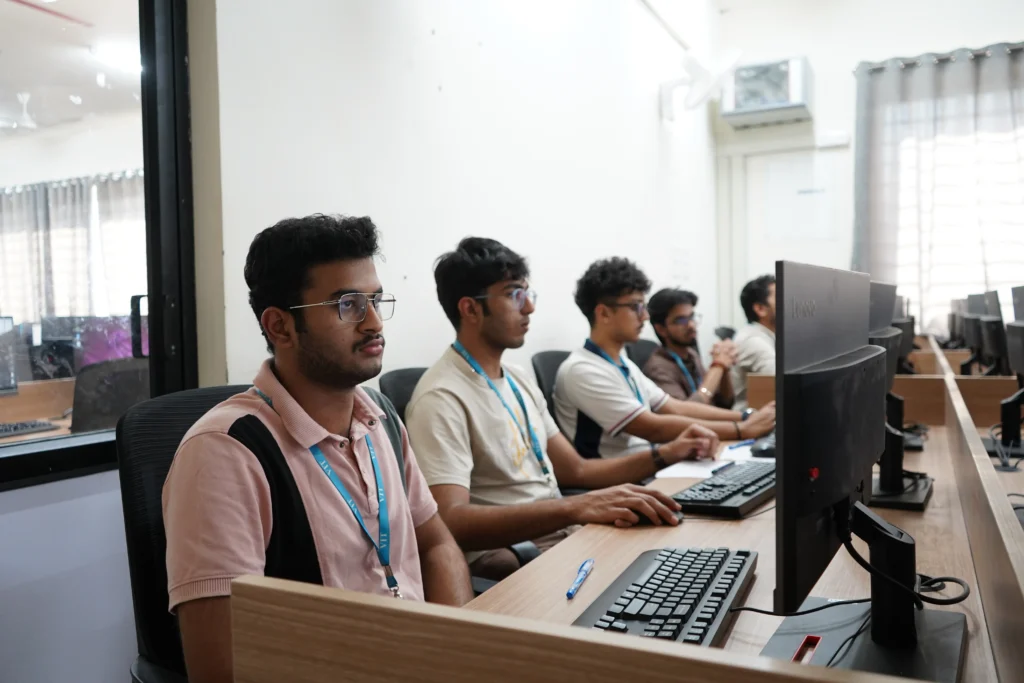
- Machine Learning Algorithms: Supervised, unsupervised, and ensemble learning techniques.
- Deep Learning: Neural Networks, CNNs, RNNs, transformers, and representation learning.
- Machine Learning for Data Science: Data preprocessing, feature engineering, model evaluation, and interpretability.
- Applied AI and Analytics: Real-world datasets, case studies, and domain-specific applications.
- Computational Intelligence Techniques: Evolutionary algorithms, swarm intelligence, fuzzy logic, and hybrid models.
- Optimization and Intelligent Decision-Making: Metaheuristics and learning-based optimization strategies.
Research Publications
- Balakrishnan, P., A. Anny Leema, V. Dhivya Shree, C. Mohammad Saad, and A. Mohan Babu. “Gene-LLMs: a comprehensive survey of transformer-based genomic language models for regulatory and clinical genomics.” Frontiers in Genetics 16 (2025): 1634882.
- Singh, Prabha, Sudhakar Tripathi, and Anand Bihari. “Exploration of Computational Approaches in Enzyme Classification: Problems and Recent Development—A Critical Review.” Archives of Computational Methods in Engineering (2025): 1-41.
- Manimaran, S., D. Uma Priya, Azees Maria, and Arun Sekar Rajasekaran. “Exploring the potential of artificial intelligence and machine learning in healthcare: challenges and research directions.” Cluster Computing 28, no. 10 (2025): 675.
- Mythatha, Ebenezar, and S. Jenicka. “A survey on mathematics behind AI models for disease prediction and diagnosis in healthcare.” Network Modeling Analysis in Health Informatics and Bioinformatics 14, no. 1 (2025): 174.
- BIKKU, THULASI, Joy Elvine Martis, Kumar M. Sunil, S. Sudha, P. Iyappan, and C. Natarajan. “Healthcare Biclustering of Predictive Gene Expression Using LSTM Based Support Vector Machine.” Informing Science 28 (2025): 12.