


High Performance Computing Lab
High Performance Computing Lab
Overview
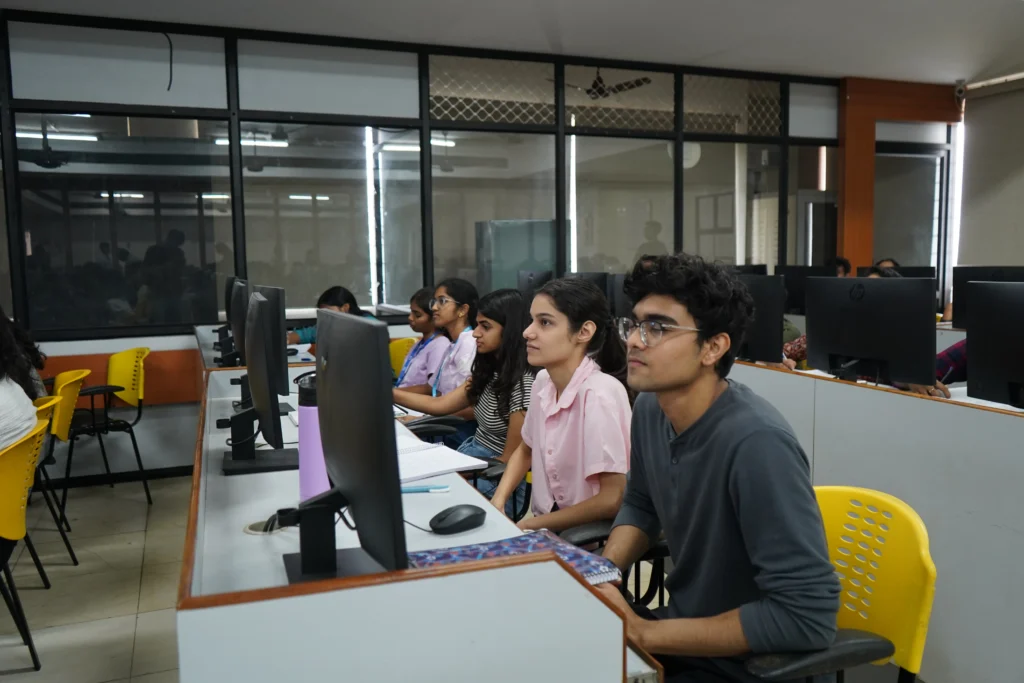
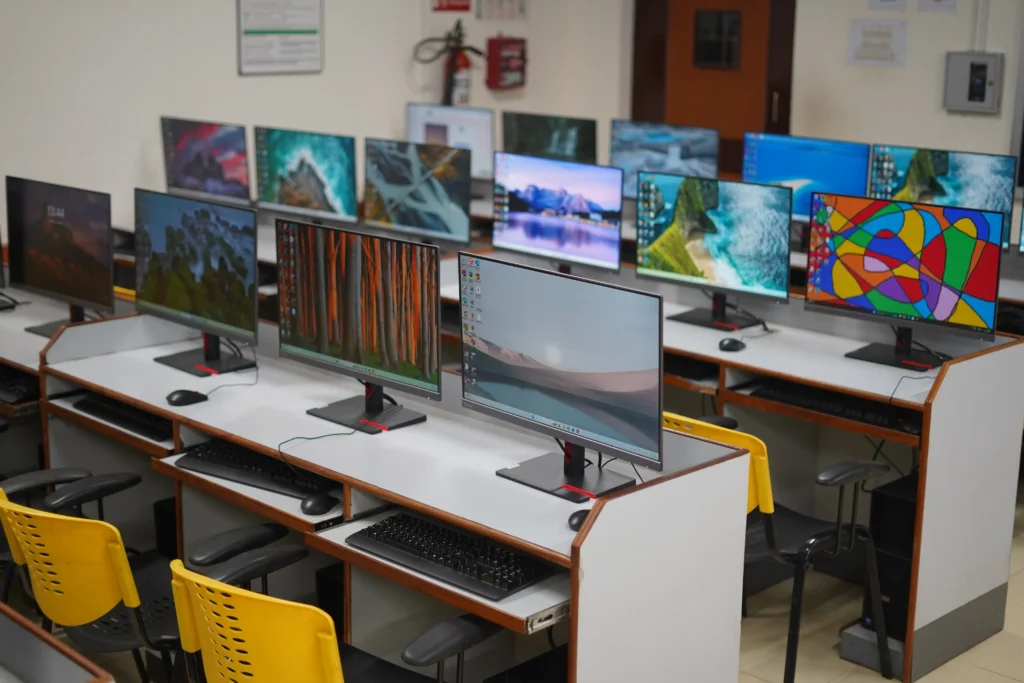
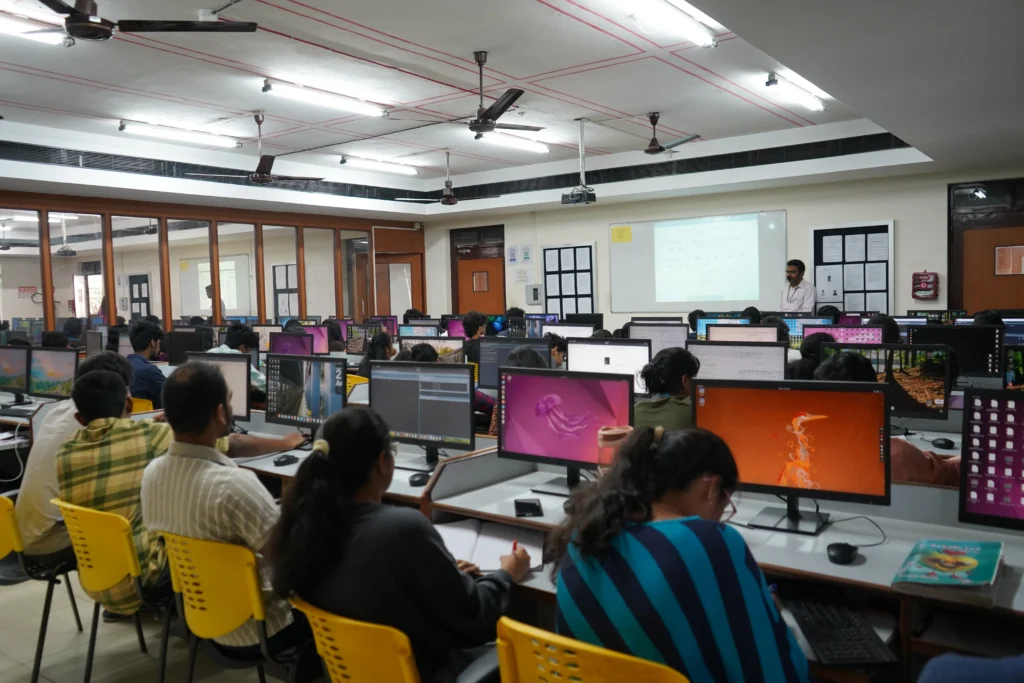
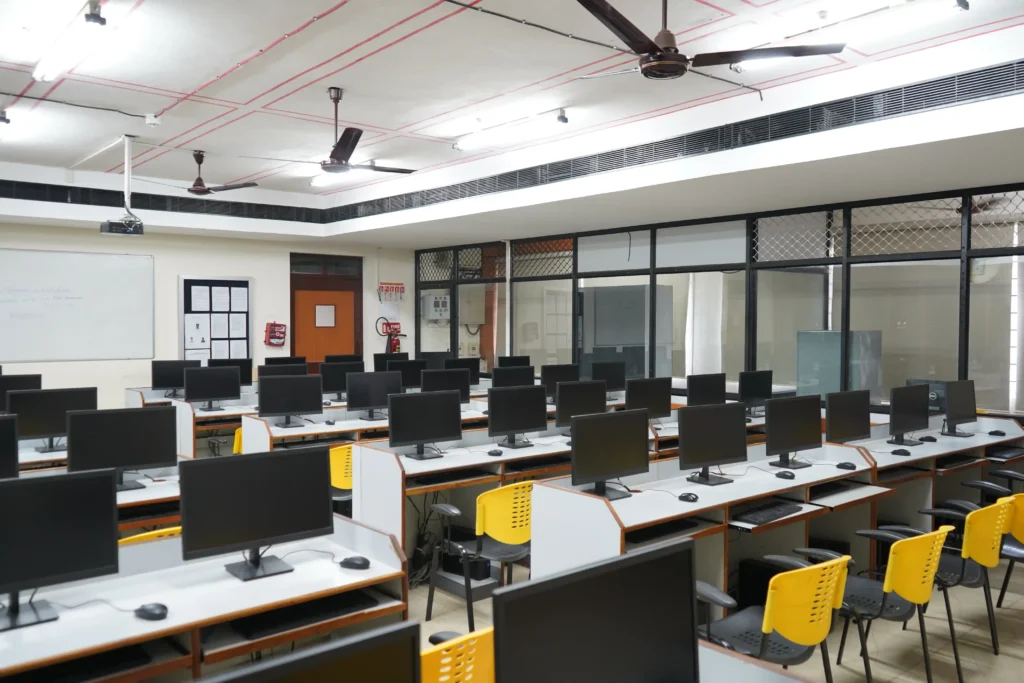
The High-Performance Computing (HPC) Laboratory aims to support undergraduate and postgraduate computing courses, including Advanced Predictive Analytics, Exploratory Data Analysis, Edge Intelligence, and Generative AI and Large Language Models. The laboratory accommodates up to 72 students and is furnished with 72 high-performance computer systems for effective practical learning. To enhance the teaching facility, the laboratory is equipped with modern instructional aids such as a projector, a whiteboard, and air-conditioning, ensuring a comfortable and technology-enabled learning environment. Students gain practical experience with high-performance computing resources and explore different computing service models.
Objectives
- Integration of the High-Performance Computing (HPC) lab for various application domains.
- To provide computational resources for practical training in a high-performance computing environment.
- To provide large-scale simulations, modeling, and data analytics.
- To promote interdisciplinary research to solve complex problems and real-world challenges
- To provide computational infrastructure to enable scientific discovery, technological innovation, and advanced research in AI, machine learning, and deep learning.
Key Focus Areas
- Exploratory Data Analysis: Focuses on understanding data patterns, trends, and relationships through statistical and visual techniques.
- Advanced Predictive Analytics: Focuses on creating and testing models to predict future results and help in making better decisions using data.
- Edge Intelligence: Deals with deploying data processing and intelligent models at the edge of networks for faster and more efficient responses.
- Advanced Data Visualization Techniques: Concentrates on presenting complex data clearly and effectively using interactive and advanced visual tools.
On-going Project Titles:
- Design of an ML model to increase the precision of identifying between benign and malevolent network attack types using cloud-based technology
- SAFECHAIN Safety of Language Models with Long Chain-of-Thought Reasoning Capabilities
Research Publications:
- Perepi, R., Prasad, V.R., Bég, O. Anwar and Settu Parthiban. “Magneto-convective flow in a differentially heated enclosure containing a non-Darcy porous medium with thermal radiation effects: a lattice Boltzmann simulation.” Journal of the Korean Physical Society, 86, 2025: 406–421.
- R Sreedhar, K Karunanithi, S Ramesh, SP Raja, Naresh Kumar Pasham. “Optimizing grid connected photovoltaic systems using elementary LUO converter and GWO-RBFNN based MPPT.” Electrical Engineering, 107, no. 2 (2025): 2297-2313
- Yash Kumar, Rishika Nair, J.R. Prashitha, G. Velvizhi. “A machine learning based strategy towards enhanced photocatalytic reduction of CO2 to fuels via g-C3N4/TiO2: A comprehensive exploration of optimum parameters.” Computational and Theoretical Chemistry,1252, 2025: pp. 115351