


IoT Lab
IoT Lab
Overview
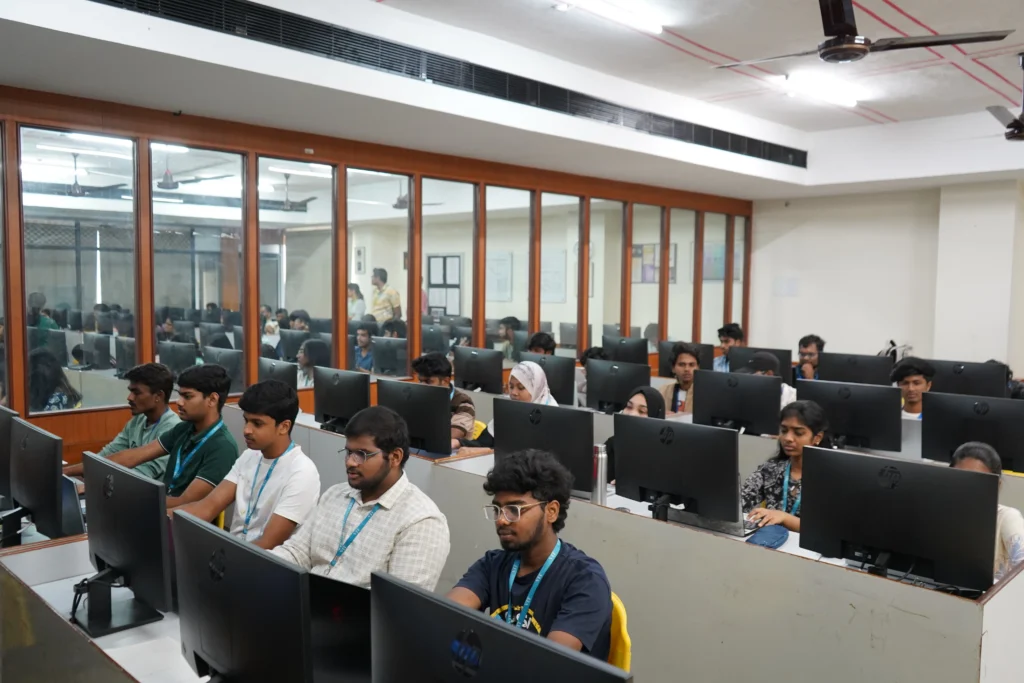
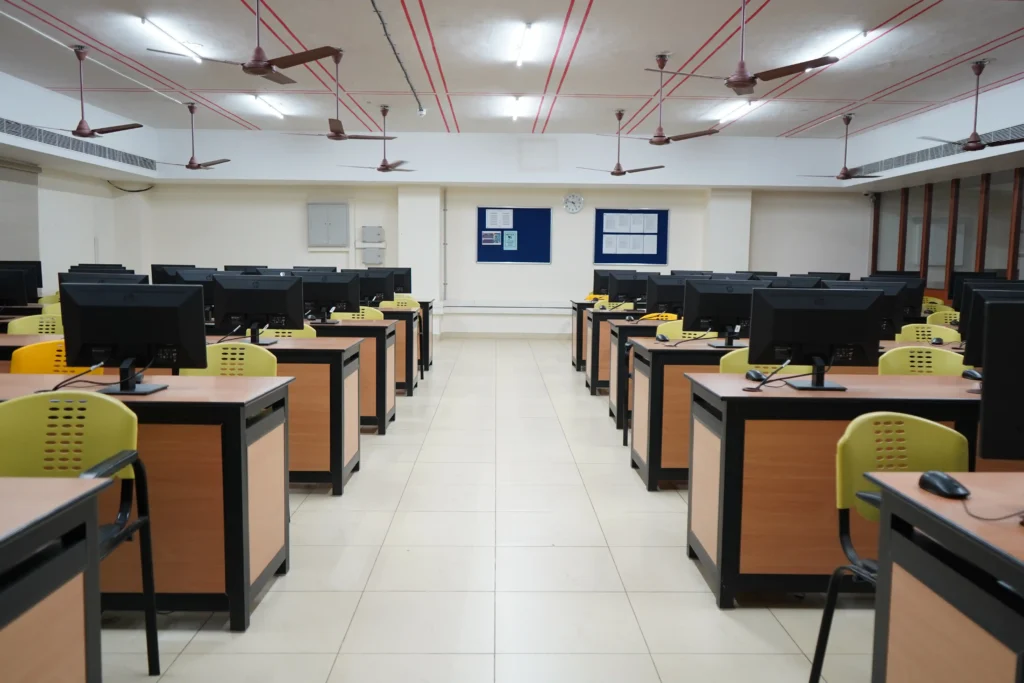
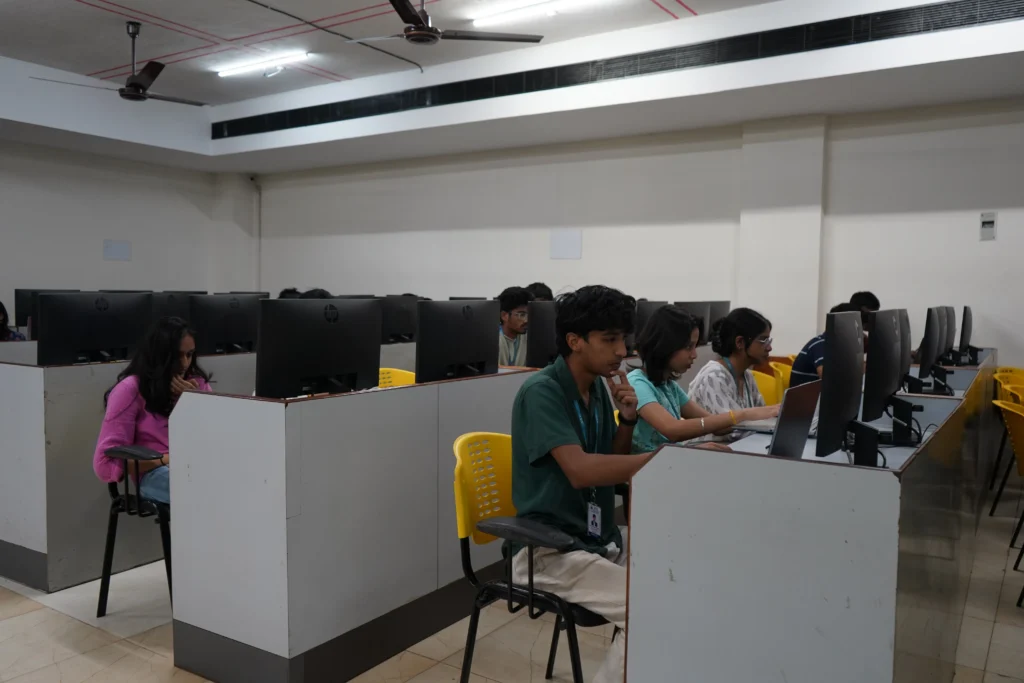
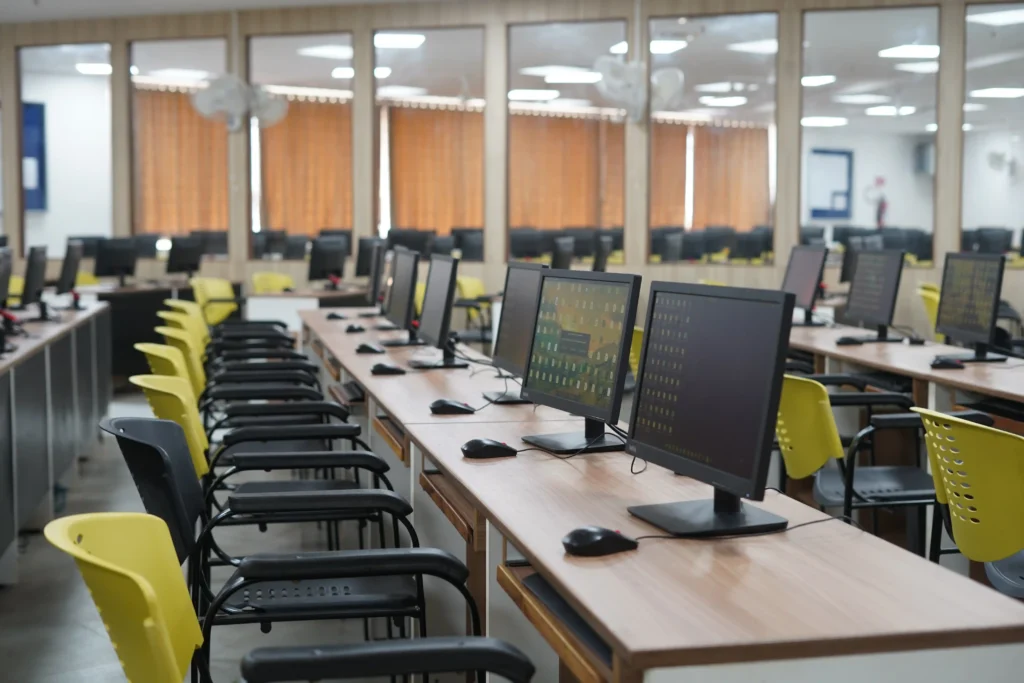
The Programming for IoT Boards Lab is a specialized teaching and experimentation facility that supports hands-on learning in Internet of Things (IoT), Embedded Systems, and Smart Computing courses under the School of Computer Science and Engineering (SCOPE), VIT Vellore Campus.
The lab is designed to enable students to program, interface, and deploy IoT-enabled embedded boards and sensor-based systems, focusing on real-time data acquisition, device communication, edge intelligence, and cloud-integrated IoT applications. The lab emphasizes end-to-end IoT system development—from low-level hardware programming to application-level integration—bridging embedded computing with networking, data analytics, and intelligent automation
Objectives
- To provide practical exposure to programming IoT boards and embedded platforms using industry-relevant tools and frameworks.
- To strengthen students’ understanding of sensor interfacing, actuator control, and real-time system behavior.
- To enable hands-on experience with IoT communication protocols and device-to-cloud integration.
- To support course-integrated mini-projects, product prototypes, and capstone projects in IoT and smart systems.
- To promote edge computing and intelligent IoT application development.
- To encourage interdisciplinary IoT solutions in domains such as smart healthcare, smart cities, agriculture, energy, and industrial automation.
Key Focus Areas
- IoT Board Programming: Arduino, ESP32/ESP8266, Raspberry Pi, and similar embedded platforms.
- Embedded C / Python Programming: Low-level and high-level programming for constrained devices.
- Sensor & Actuator Interfacing: Temperature, humidity, motion, gas, pressure sensors; motors, relays, displays.
- IoT Communication Protocols: MQTT, HTTP/REST, CoAP, UART, SPI, I2C.
- Wireless Connectivity: Wi-Fi, Bluetooth, BLE, LoRa basics.
- Edge & Cloud Integration: Data acquisition, cloud dashboards, IoT platforms, and APIs
- Smart System Development: Home automation, environmental monitoring, wearable and industrial IoT use cases.
- Security & Reliability (Introductory): Device authentication, secure communication, and fault handling.
On-going Project Titles :
- Cluster-based optimization techniques to enhance the efficiency of large-scale IONT applications.
- Multimodal Multi-loss Fusion Network for Sentiment Analysis.
Research Publications
- G. Nithyavani and G. Naga Raja, “A Comprehensive Survey on Security and Privacy Challenges in Internet of Medical Things Applications: Deep Learning and Machine Learning Solutions, Obstacles, and Future Directions,” in IEEE Access, vol. 13, pp. 188955-188989, 2025, doi: 10.1109/ACCESS.2025.3588489
- V. R. Rajasekar and S. Rajkumar, “FPES-IDS: Forecast-Path and Exponential Smoothing-Based Intrusion Detection System to Mitigate Blackhole Attack in RPL-Based 6LoWPANs,” in IEEE Access, vol. 13, pp. 67170-67195, 2025, doi: 10.1109/ACCESS.2025.3557670.
- S. Leela Jacob and H. Parveen Sultana, “Spiking Residual ShuffleNet-Based Intrusion Detection in IoT Environment,” in IEEE Access, vol. 13, pp. 104257-104280, 2025, doi: 10.1109/ACCESS.2025.3579777.
- Latha Reddy N., Gopinath Masila P., Analysis of IoT Applications in Highly Precise Agriculture Farming, Recent Patents on Engineering; Volume 19, Issue 2, Year 2025, e180923221207. DOI: 10.2174/1872212118666230918124939
- V. Sivakumar, A. H. Reddy and A. Nehal Varma, “GRU in Anomaly Detection for IoT: A Comparative Study,” 2025 IEEE International Students’ Conference on Electrical, Electronics and Computer Science (SCEECS), Bhopal, India, 2025, pp. 1-7, doi: 10.1109/SCEECS64059.2025.10940416