


Software Systems Lab
Software Systems Lab
Overview
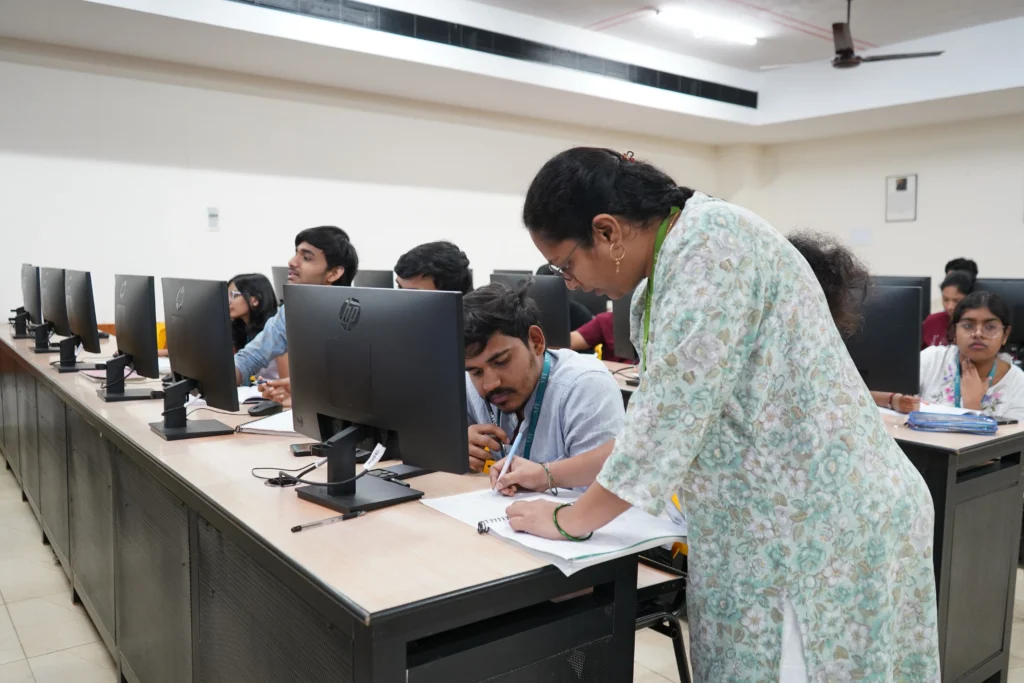
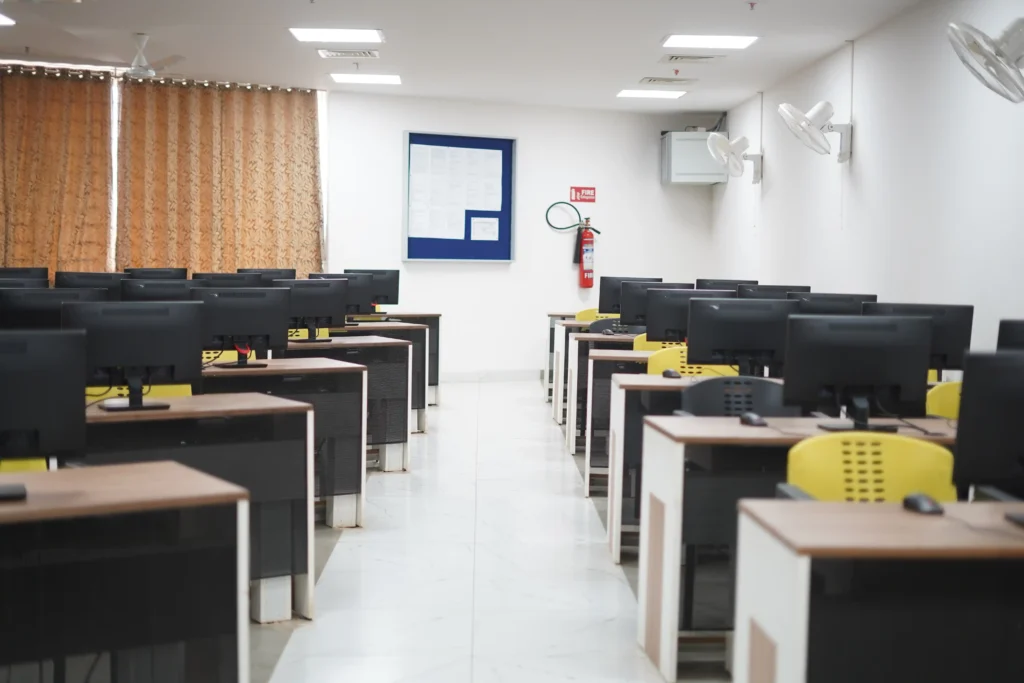
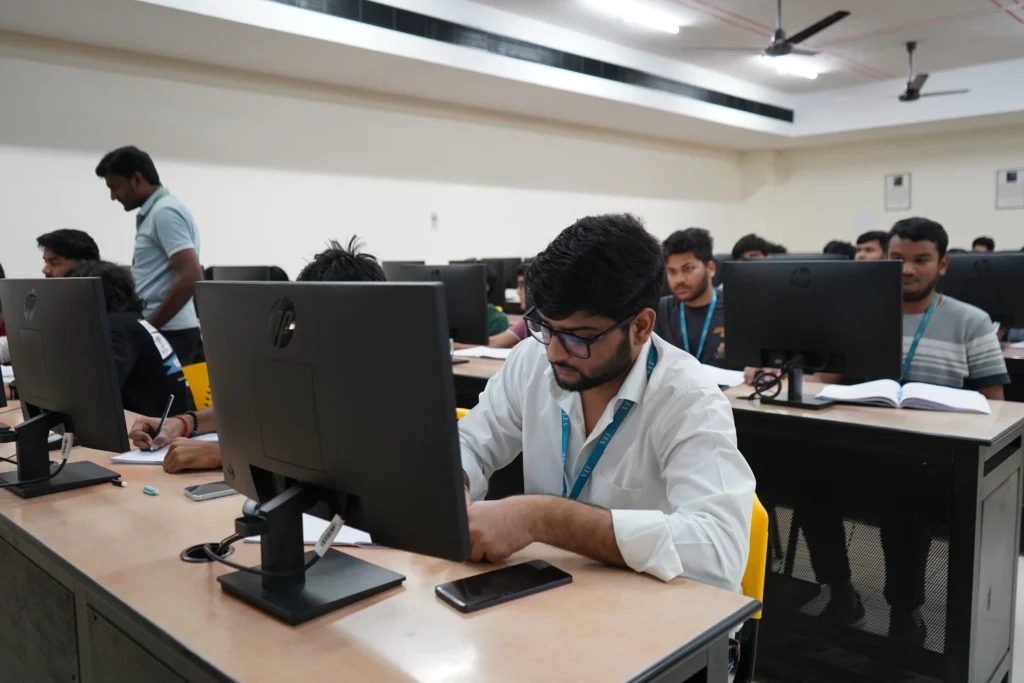
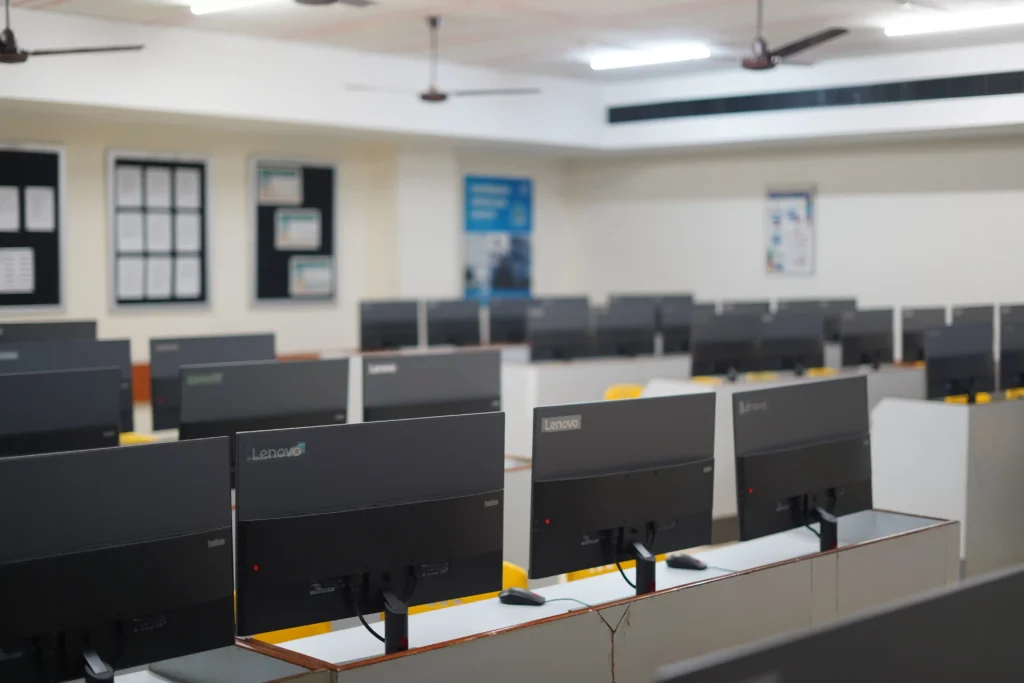
The SJT 417 – Software Systems Lab is a specialized computing facility under the School of Computer Science and Engineering (SCOPE), VIT, designed to provide hands-on experience in software system design, development, deployment, and analysis.
The lab focuses on building a strong foundation in Software Engineering, Software Engineering Methodologies, Usability Design of Software Applications, and Software Engineering Principles
The lab enables students to understand how modern software systems are architected, implemented, tested, optimized, and maintained in real-world environments. Through structured laboratory exercises and project-based learning, students translate theoretical concepts into scalable and deployable software solutions, thereby strengthening problem-solving abilities, system integration skills, and performance evaluation capabilities.
Objectives
- To provide practical exposure aligned with core courses such as Machine Learning, Distributed Systems, Software Engineering, Cloud Computing, and Web Technologies
- To reinforce concepts related to data analysis, distributed processing, software architecture, and application-level system design
- To enhance proficiency in programming, system integration, and application development using modern languages, frameworks, and tools
- To support student and faculty research in machine learning, distributed systems, cloud-based applications, and web technologies
- To enable experimentation with open-source platforms, data science libraries, cloud services, and distributed frameworks
- To encourage analytical evaluation of system performance through experimentation, testing, optimization, and result analysis
- To prepare students for industry roles in data science, cloud engineering, distributed application development, and full-stack software development
- To bridge the gap between academic curriculum and real-world software system practices through hands-on projects and case studies
- To develop skills in scalable system design, deployment, debugging, and performance optimization, essential for modern software engineering careers
Key Focus Areas
SJT 417 – Software Systems Lab focuses on contemporary software system domains that equip students with practical skills required for modern computing and industry-oriented software development. The lab supports:
- Machine Learning for Data Science for analyzing large datasets, building predictive models, and applying data-driven techniques to real-world problems.
- Distributed Systems emphasizing scalable architectures, inter-process communication, synchronization, and fault-tolerant system design
- IT Project Management focusing on software project planning, scheduling, resource management, Agile practices, and team-based development workflows
- Cloud Microservices and Applications for designing, developing, and deploying cloud-native applications using microservices architecture and service-based communication
- Advanced Web Technologies enabling the development of dynamic, secure, and scalable web applications using modern front-end and back-end frameworks
Research Publications
- Jothi K. R., Kambala G., Lanjewar C. K., Jain L., Ramesh J. V. N., and Singh P. P. “Detecting Local Software Issues Using NSGA Multi-optimization.” Communications in Computer and Information Science (2025). DOI: 10.1007/978-3-031-73494-6_8
- Padmanabha Reddy Y. C. A., Kosuru S. S., Sirisalla N. R., Vivekananda G. N., and Perala V. A. “Empirical Techniques for Effort Estimation in Designing Effective ML Models.” International Journal of Computers and Applications (2025). DOI: 10.1080/1206212X.2025.2454509
- Mulla N., Jayakumar N., Joshi S., and Godse D. “Study on Automatic Software Test Case Generation.” Lecture Notes in Electrical Engineering (2025). DOI: 10.1007/978-981-97-8031-0_27
- M. S., M. K. L., S. K. Svn, and T. K. “A Comprehensive Review on Authentication, Threats and Privacy Preserving Challenges for Securing Smart Transportation Infrastructure.” Peer-to-Peer Networking and Applications (2025). DOI: 10.1007/s12083-025-02125-2
- Ray, Sayak, and Rajeshkannan Regunathan. “Vulnerability and Security Analysis of E-Commerce Websites.” Lecture Notes in Networks and Systems (2025). DOI: 10.1007/978-981-96-5535-9_8.