


Communication Engineering Lab
- Home
- Schools
- SENSE
- Facilities
- Communication Engineering Lab
Communication Engineering Lab - SENSE
Overview
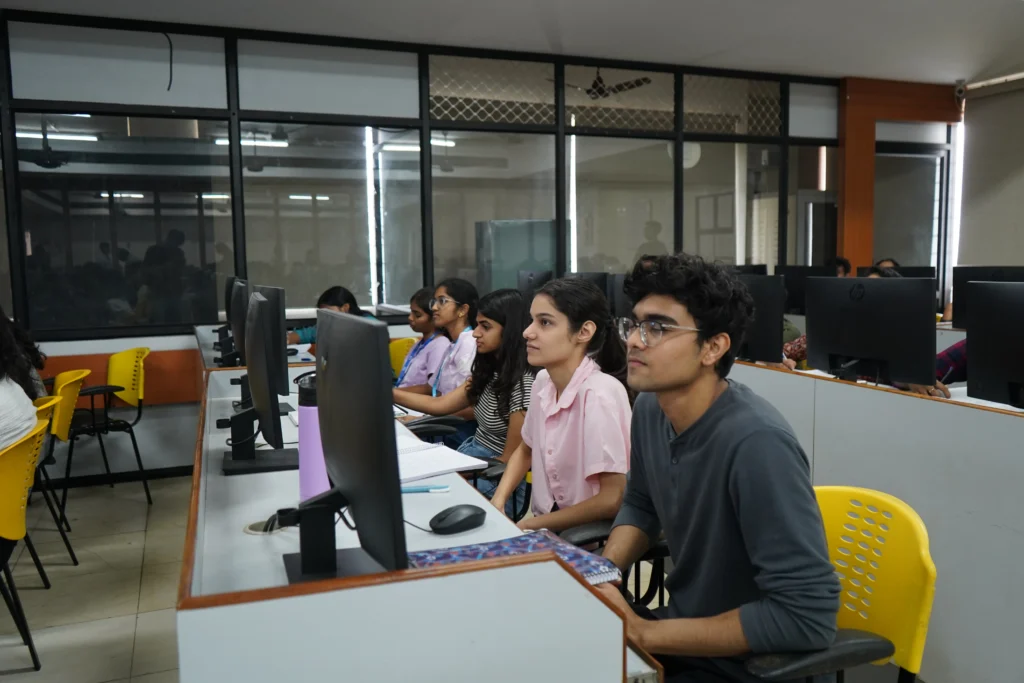
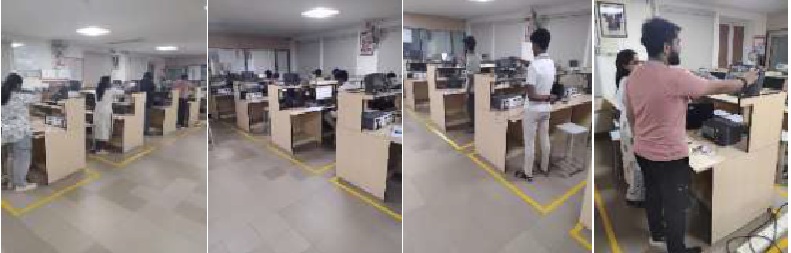
The Communication Engineering Laboratory is a core instructional facility under the School of Electronics Engineering (SENSE), VIT Vellore, established to provide outcome-based practical training in communication engineering. The laboratory supports core courses such as Analog Communication Systems and Digital Communication Systems, and facilitates experiential learning through structured experiments and project-based activities.
The laboratory enables students to design, implement, and analyse communication circuits and systems, thereby reinforcing fundamental concepts through hands-on practice. It integrates theoretical knowledge with real-time implementation, measurement, and debugging using contemporary hardware platforms and professional software tools.
Objectives
- To provide hands-on experience in the design and implementation of analog and digital communication systems.
- To reinforce fundamental concepts of modulation, demodulation, and signal processing through practical experimentation.
- To develop the ability to analye communication system performance in the presence of noise and channel impairments.
- To familiarize students with modern laboratory instruments, measurement techniques, and simulation tools.
- To cultivate problem-solving skills through systematic experimentation, observation, and analysis.
- To prepare students for advanced studies, research, and industry applications in communication engineering.
Key Focus Areas
- Modulation and Demodulation Techniques : AM, FM, PM, and introductory digital modulation schemes.
- Communication System Design : Implementation of transmitters, receivers, mixers, and filtering stages.
- Noise and Performance Analysis : Study of SNR, noise figure, and system sensitivity.
- Instrumentation and Measurement: Use of oscilloscopes, spectrum analysers, signal generators, and related tools.
- Simulation and Validation : Use of software tools for modelling and verification of communication systems.
- Real-Time Implementation and Debugging : Practical exposure to signal behaviour, circuit limitations, and troubleshooting techniques.